Screen-free activities that keep children entertained while building artistic confidence.
Why Screen-Free Crafts Matter for Kids’ Development
In today’s digital landscape, children are spending unprecedented amounts of time in front of screens—tablets, smartphones, computers, and televisions have become constant companions in modern childhood. While technology certainly has its place in education and entertainment, the growing body of research reveals concerning trends about excessive screen exposure. Pediatricians and child development experts increasingly recommend balanced approaches that incorporate substantial screen-free time, particularly activities that engage children’s hands, minds, and imaginations in tangible, real-world ways.

Crafting offers a powerful antidote to screen saturation. When children engage in hands-on creative projects, they develop crucial skills that passive screen consumption simply cannot provide. The act of cutting paper with scissors, threading beads onto string, or mixing paint colors requires fine motor coordination that strengthens the small muscles in fingers and hands—essential preparation for writing, typing, and countless daily tasks. These activities demand sustained attention and patience as children work through multi-step processes, learning to follow sequences and solve problems when things don’t go as planned.
Boosts Focus & Patience
Screen-free activities train children to concentrate deeply on single tasks, building attention spans that transfer to academic work and social interactions.
Develops Motor Skills
Cutting, gluing, painting, and molding strengthen hand-eye coordination and dexterity essential for writing and everyday independence.
Ignites Imagination
Open-ended creative projects encourage original thinking, problem-solving, and the confidence to transform ideas into reality.
Builds Confidence
Completing tangible projects creates pride and self-esteem, teaching children they can accomplish challenging goals through effort.
Perhaps most importantly, crafting nurtures imagination in ways that structured digital content cannot. A blank piece of paper and some crayons present infinite possibilities—there’s no “right” way to create, no predetermined path or algorithm guiding the experience. Children learn to trust their own ideas, make independent choices about colors and shapes, and express emotions and stories through visual means. This creative confidence becomes a foundation for innovative thinking in all areas of life, from science and mathematics to social problem-solving and self-expression.
Leading pediatric organizations, including the American Academy of Pediatrics, have established clear guidelines recommending strict limits on recreational screen time, particularly for younger children. They emphasize that real-world, hands-on experiences during crucial developmental windows lay essential neural pathways that screen-based activities cannot replicate. The tactile feedback of touching materials, the spatial reasoning required to assemble three-dimensional objects, and the social learning that happens when children craft together—these irreplaceable experiences shape healthy brain development and create resilient, capable young people ready to navigate an increasingly complex world.
Essential Benefits of Crafting for Children
The advantages of regular crafting extend far beyond keeping children occupied or creating cute decorations for the refrigerator. When we look closely at what happens during creative projects, we discover that crafting serves as a comprehensive developmental tool, touching nearly every aspect of a child’s growth. From the cognitive challenges of planning and executing a project to the emotional satisfaction of self-expression, crafting activities provide rich, multidimensional learning experiences that support children’s development in profound and lasting ways.
Cognitive & Academic Growth
Every craft project is essentially a problem-solving exercise disguised as fun. Children must plan their approach, gather necessary materials, follow sequences of steps, and adapt when unexpected challenges arise. This executive function practice directly translates to improved academic performance and life skills.
- Strengthens planning and organizational abilities
- Teaches cause-and-effect relationships
- Integrates early math concepts like counting, patterns, and measurement
- Introduces scientific principles through experimentation with materials
- Builds vocabulary as children describe their creative choices
Emotional & Social Development
Crafting provides safe spaces for emotional expression and processing. Children can externalize feelings through color choices, subject matter, and creative intensity. The focused, repetitive motions of many crafts also offer calming, almost meditative benefits that reduce anxiety and stress.
- Encourages healthy emotional expression and regulation
- Reduces anxiety through focused, mindful activity
- Builds frustration tolerance and resilience
- Creates opportunities for shared family experiences
- Teaches cooperation and sharing during group projects
The family bonding potential of crafting activities cannot be overstated. In our busy, fragmented modern lives, sitting down together to create something provides precious opportunities for connection, conversation, and collaboration. Parents and children working side-by-side on projects create shared memories and inside jokes, strengthening relationships in ways that simply watching television together cannot achieve. These crafting sessions become traditions children remember fondly into adulthood, associating creativity with love, support, and belonging.
Improved Focus
Children who regularly engage in hands-on crafts show better concentration in classroom settings
Stronger Family Bonds
Parents report closer relationships when regularly crafting together with children
Enhanced Problem-Solving
Regular crafters demonstrate superior creative problem-solving abilities
Remarkably, crafting activities naturally integrate fundamental STEM concepts without feeling like formal lessons. Mixing paint teaches color theory and chemical reactions. Building structures with cardboard explores engineering principles and gravity. Measuring materials for recipes introduces fractions and ratios. Pattern-making develops mathematical thinking. These hands-on explorations make abstract concepts concrete and memorable, laying groundwork for future academic success while children think they’re simply playing and creating. The best learning happens when children are so engaged they don’t realize they’re learning at all—and crafting delivers exactly this kind of joyful, meaningful education.
Simple Supplies to Get Started at Home
One of the most wonderful aspects of children’s crafting is that it doesn’t require expensive specialty supplies or dedicated craft rooms. The barrier to entry is remarkably low—with just a few basic materials and a bit of creative thinking, you can establish a functional crafting station that will serve your family for years. The key is starting with versatile fundamentals that can be combined in countless ways, then gradually expanding your collection as you discover which types of projects your children enjoy most.
Paper Products
- Construction paper in assorted colors
- White copy paper for drawing and painting
- Cardstock for sturdier projects
- Tissue paper for collages and decorations
- Old newspapers and magazines for cutting
Adhesives & Tools
- Child-safe scissors with rounded tips
- Glue sticks and white school glue
- Clear tape and masking tape
- Staplers appropriate for small hands
- Hole punches for special effects
Coloring & Painting Supplies
- Crayons, markers, and colored pencils
- Washable tempera or poster paints
- Paintbrushes in various sizes
- Watercolor sets for softer effects
- Chalk and oil pastels for variety
Embellishments
- Pompoms, buttons, and googly eyes
- Glitter, sequins, and stickers
- Pipe cleaners and yarn
- Ribbon, fabric scraps, and felt pieces
- Natural items like leaves and twigs
Many families discover that some of the best crafting materials cost nothing at all—they’re already in your home waiting to be repurposed. Empty cereal boxes become construction material for robots and buildings. Paper towel tubes transform into binoculars, musical instruments, or marble runs. Egg cartons serve as paint palettes or become caterpillars and flowers. Plastic bottle caps turn into game pieces or mosaic tiles. Old magazines provide images for collages. Fabric scraps from outgrown clothing find new life in textile projects. This approach not only saves money but also teaches children valuable lessons about creativity, resourcefulness, and environmental stewardship—showing them that “garbage” can become treasure with a little imagination.
🎨 DIY Non-Toxic Craft Supplies
Homemade Playdough: Mix 2 cups flour, 1 cup salt, 2 cups water, 2 tablespoons vegetable oil, and food coloring. Cook over medium heat, stirring constantly until it forms a ball.
Finger Paint: Combine 1 cup flour, 2 cups water, and food coloring. Cook until thick, stirring constantly. Cool before use.
Puffy Paint: Mix equal parts shaving cream and white glue, add food coloring. Creates dimensional, textured designs.
Organization makes crafting more inviting and less stressful for everyone. Designate a specific area—even just a shelf or drawer—as the craft headquarters. Use clear containers, labeled bins, or even repurposed jars and boxes to sort supplies by category. When children can see what’s available and access it independently (with age-appropriate supervision), they’re more likely to initiate creative projects on their own. Consider creating a portable craft caddy for kitchen table projects, keeping messier supplies like paint in a separate, adult-controlled area. A plastic tablecloth or old sheet designated as the “craft cover” protects surfaces and makes cleanup quick. Finally, establish a rotating display area—a wall, bulletin board, or refrigerator space—where finished projects can be proudly showcased before being photographed and either archived or recycled, preventing craft clutter from overwhelming your home while still honoring your child’s creative efforts.
Top 5 Kid-Friendly Craft Projects to Spark Creativity
The following five projects represent excellent starting points for families beginning their screen-free crafting journey. Each has been selected for its perfect balance of simplicity and engagement—simple enough that children can succeed with minimal frustration, yet engaging enough to hold attention and produce satisfying results. These projects use readily available materials, accommodate a wide age range with minor modifications, and most importantly, invite personal expression and variation. No two pompom ice pops or goofy robots will look exactly alike, which is precisely the point—encouraging children to make creative choices and see their unique visions come to life.
Pompom Ice Pops
These cheerful faux treats combine fine motor practice with color exploration. Children glue colorful pompoms onto craft sticks in patterns or random arrangements, creating “ice pops” perfect for pretend play or room decoration. The tactile pompoms are satisfying to handle, and the project reinforces color recognition, counting, and pattern-making skills.
Homemade Clay
Using simple kitchen ingredients—flour, salt, water, and food coloring—children can help create their own modeling clay. The mixing process itself is a sensory-rich science lesson, and the resulting clay can be molded into endless creations. Air-dry sculptures become keepsakes, or the clay can be stored for repeated play sessions.
Ooey Gluey Suncatchers
This magical project turns colored glue into translucent window art. Children squeeze designs onto plastic sheets or directly into clear frames, mixing colors and watching them blend. Once dry, the rubbery creations peel off and stick to windows, catching sunlight beautifully. It teaches patience (waiting for drying), color mixing, and design principles.
Goofy Robots
Cardboard boxes of various sizes become robot bodies, heads, and limbs. Children decorate with aluminum foil, buttons, bottle caps, and markers, creating unique mechanical characters. This project encourages three-dimensional thinking, problem-solving (how to attach pieces), and storytelling as children imagine their robots’ personalities and adventures.
Mail a Hug
Children create special cards with arms that fold out into “hugs”—simple paper crafts decorated with drawings and loving messages. These get mailed to grandparents, friends, or others who might need cheering. The project teaches empathy, connects crafting to real-world communication, and shows children how their creativity can bring joy to others.
What makes these projects particularly valuable is their flexibility and scalability. Younger children (ages 3-5) can participate with more adult assistance, focusing on the sensory aspects and basic manipulation of materials. Older elementary-age children can take on the projects independently, adding complexity through elaborate decorations, detailed planning, or combining multiple techniques. Teenagers might use these as foundations for more sophisticated artistic explorations, or teach them to younger siblings, reinforcing their own skills through mentorship. This adaptability means a single craft idea can grow with your family, remaining relevant and engaging across developmental stages.
Beyond the immediate fun and satisfaction of creating, these projects build specific skill sets. Pompom ice pops and suncatchers develop fine motor control and patience. Homemade clay engages multiple senses and teaches material science concepts. Robot construction integrates spatial reasoning and basic engineering principles. Mail-a-hug cards connect creativity to emotional intelligence and literacy. Together, this collection offers a well-rounded introduction to artistic expression, demonstrating to children that creativity takes many forms—2D and 3D, functional and decorative, individual and social. Each completed project becomes a confidence booster, tangible proof that they can envision something and bring it into being through their own efforts and imagination.
Step-by-Step Guide: Making a Paper Bag Pumpkin
This delightful seasonal craft transforms an ordinary brown paper lunch bag into a festive pumpkin decoration, perfectly embodying the principles of creative recycling and accessible crafting. The paper bag pumpkin works wonderfully for autumn celebrations, Halloween festivities, or Thanksgiving decorations, and the basic technique can be adapted for other seasons—white bags become snowmen in winter, pastel bags become Easter eggs, and so on. What makes this project particularly valuable is its combination of simplicity and versatility: young children can create satisfying versions with minimal assistance, while older kids can elaborate with sophisticated decorating techniques and personalized touches.

Prepare the Bag
Turn a standard brown paper lunch bag inside out so the plain side faces outward. This creates a better painting surface and hides any logos or text. If the bag has printed graphics that won’t invert, use the outside and paint over them with extra coats.

Create Volume
Fill the bag about three-quarters full with crumpled newspaper, shredded paper from your recycling bin, or even plastic grocery bags. The stuffing gives the pumpkin its rounded shape. Don’t overstuff—leave room at the top to close the bag.

Shape and Secure
Twist the top of the stuffed bag tightly to form the pumpkin’s “stem.” Secure with a rubber band, then wrap the rubber band section with green construction paper, green tape, or paint it brown for a realistic stem appearance.

Paint Your Pumpkin
Use orange tempera or acrylic paint to cover the entire bag exterior. Children can apply paint with brushes, sponges, or even their hands for sensory engagement. Allow to dry completely—this might take several hours or overnight depending on paint thickness.

Add Personality
Once dry, decorate with jack-o’-lantern faces, fall patterns, glitter, ribbons, buttons, or any embellishments your child chooses. Use markers, paint, or glued-on construction paper shapes. Each pumpkin’s unique personality emerges through these creative choices.
The educational value hidden within this seemingly simple craft is substantial. The project naturally incorporates measurement and estimation—how much stuffing is needed? It demonstrates transformation—everyday objects becoming art. Color mixing opportunities arise if you let children create their own orange by combining red and yellow paint. The stuffing and shaping stages develop spatial reasoning as children visualize the final three-dimensional form. Painting large surfaces builds arm strength and coordination. The decorating phase invites storytelling—will their pumpkin be scary or friendly? Traditional or whimsical? These decisions exercise decision-making skills and creative autonomy.
Creative Variations to Try
- Mini Pumpkin Patch: Use small paper bags to create a whole family of pumpkins in different sizes
- Glitter Glam: Mix glitter into paint before applying, or sprinkle onto wet paint for sparkly gourds
- Textured Techniques: Dab paint with crumpled paper or sponges to create interesting surface patterns
- Natural Elements: Attach real twigs, leaves, or raffia for authentic fall appeal
- Character Pumpkins: Transform into favorite characters by adding distinctive features and accessories
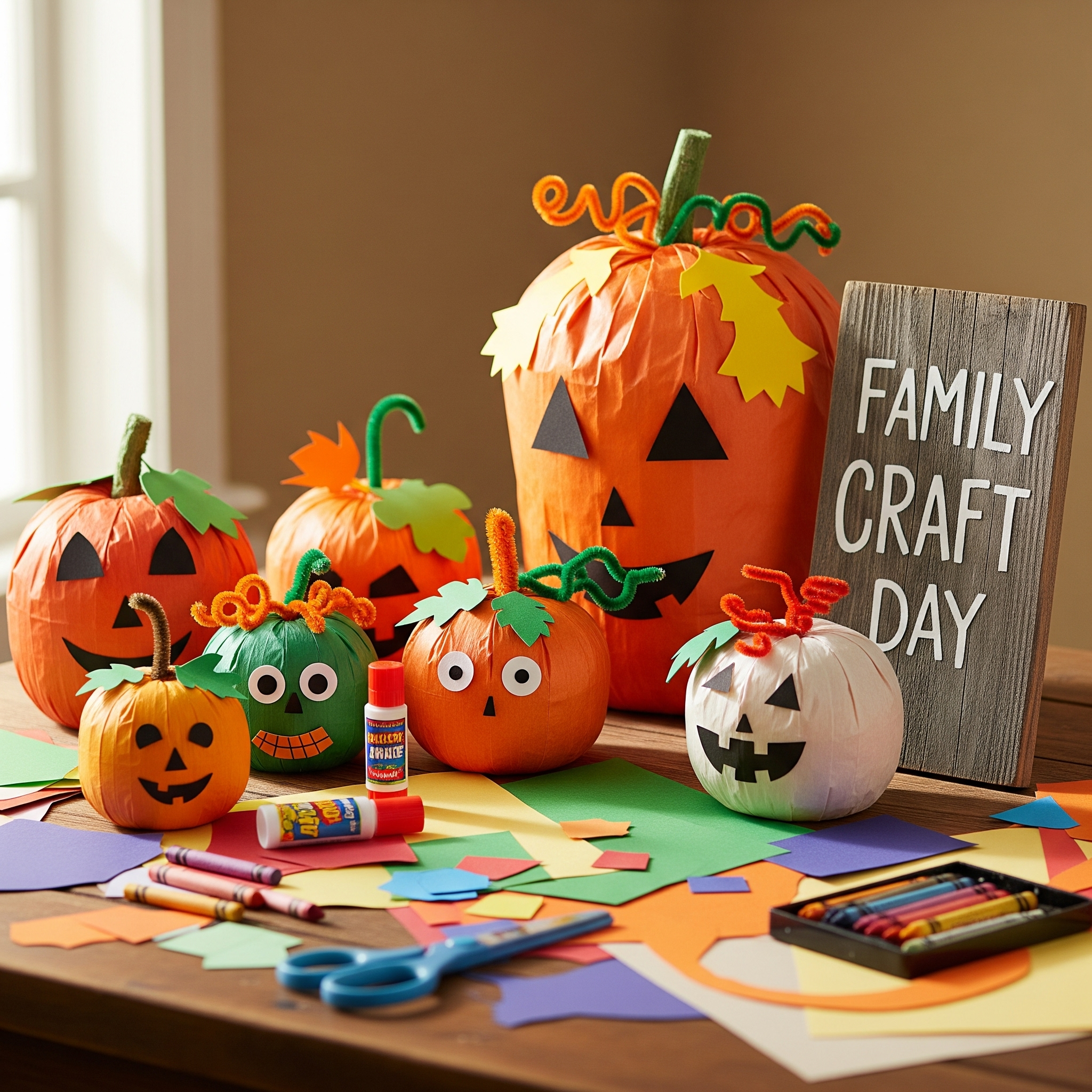
This project exemplifies the philosophy of meaningful crafting—activities that combine fun with purpose. The finished pumpkins can decorate your home, serve as centerpieces for fall gatherings, or become toys for imaginative play. They’re lightweight enough for young children to carry around as pretend pumpkin picking props. The process itself provides sensory experiences (squishing paper, feeling wet paint), fine motor practice (twisting bag tops, applying paint carefully), and the satisfaction of creating something useful and beautiful from humble materials. Most importantly, it demonstrates to children that they don’t need fancy supplies or store-bought kits to make something special—creativity, not money, is the essential ingredient in successful crafting.
How Crafts Build Artistic Confidence and Lifelong Skills
The impact of regular crafting extends far beyond childhood, laying foundations for capabilities and attitudes that serve individuals throughout their lives. When we invest time in creative activities with children, we’re not simply keeping them busy or creating cute keepsakes—we’re fundamentally shaping how they approach challenges, perceive their own capabilities, and interact with the world. The confidence that develops when a child successfully completes a craft project radiates outward, influencing their academic performance, social relationships, career choices, and overall life satisfaction. Understanding these deeper benefits helps us appreciate crafting not as frivolous playtime, but as essential developmental work disguised as fun.
Completing Projects
Following a project from concept through execution teaches children they can set goals and achieve them. This “I can do hard things” mentality transfers directly to academic challenges, athletic pursuits, and life obstacles.
Problem-Solving
When glue doesn’t stick, colors mix unexpectedly, or designs don’t turn out as imagined, children learn to adapt and find solutions. These experiments in resilience build flexible thinking and emotional regulation.
Growth Mindset
Viewing mistakes as learning opportunities rather than failures creates lifelong learners. Crafting naturally provides low-stakes practice in trying, failing, adjusting, and trying again—the essence of a growth mindset.

The relationship between crafting and self-esteem is profound and well-documented in developmental psychology research. Each completed project serves as concrete evidence of capability—physical proof that “I can make things happen.” This tangible validation is especially powerful for children who struggle academically or socially, providing an alternative arena where they can experience success and recognition. The child who finds reading difficult might discover they’re brilliant at spatial design in 3D crafts. The student who sits quietly in class might express vibrant personality through color and pattern choices. Crafting creates diverse opportunities for children to discover and showcase their unique strengths, building robust self-concepts that aren’t dependent on narrow definitions of achievement.
Skills That Transfer Beyond Art
The competencies developed through regular crafting support success across all life domains:
- Patience and delayed gratification through multi-step projects
- Planning and organization by gathering materials and thinking ahead
- Focus and attention to detail during precise tasks
- Risk-taking and experimentation in safe environments
- Following instructions while adding personal creativity
- Receiving and applying feedback constructively
Emotional Intelligence Development
Crafting nurtures crucial emotional skills:
- Self-expression of feelings through creative choices
- Frustration tolerance when projects challenge abilities
- Pride and self-efficacy from accomplishment
- Empathy when creating gifts for others
- Stress management through focused, calming activities
- Self-regulation of impulses and emotions during detailed work
Perhaps most significantly, early positive experiences with creativity can influence career paths and life satisfaction decades later. Adults who engaged regularly in arts and crafts as children report higher levels of creative confidence in professional settings, greater willingness to approach problems innovatively, and more satisfaction with their ability to pursue hobbies and interests. They’re more likely to identify as “creative people”—not necessarily pursuing artistic careers, but bringing creative thinking to whatever they do, whether that’s engineering, teaching, parenting, or entrepreneurship. The child painting paper bag pumpkins today might become tomorrow’s architect, graphic designer, scientist using creative problem-solving, or simply an adult who finds joy and stress relief in creative hobbies. By nurturing artistic confidence now, we’re equipping children with tools they’ll use throughout their entire lives, preparing them not just for school, but for fulfilling, creative, resilient adulthood.
Tips for Parents and Educators to Maximize Crafting Benefits
The way adults facilitate crafting experiences significantly impacts the benefits children derive from them. Well-intentioned parents and educators sometimes inadvertently diminish creative activities’ value through overly prescriptive instructions, excessive focus on finished products, or failure to provide adequate emotional support during challenging moments. By contrast, when adults approach crafting with the right mindset and strategies, they amplify the developmental, emotional, and creative benefits exponentially. The following evidence-based approaches help ensure that crafting time becomes truly valuable learning time, building skills and confidence rather than just producing cute decorations.
Embrace Open-Ended Creativity
Resist the urge to show children exactly what their project “should” look like or to correct their creative choices. Instead of “Make a red flower with five petals,” try “What would you like to create with these materials?” Open-ended projects without predetermined outcomes encourage original thinking and personal expression. Children should feel free to deviate from examples, combine ideas in unexpected ways, and pursue their own creative visions.
Balance Guidance with Independence
Find the sweet spot between abandoning children to figure everything out alone and micromanaging every step. Offer support when children genuinely struggle, but allow productive struggle that builds problem-solving skills. Ask guiding questions like “What do you think would happen if…?” or “How could you solve that challenge?” rather than immediately providing solutions. This scaffolded approach builds confidence and competence simultaneously.
Focus on Process Over Product
Comment on effort, choices, and learning rather than only praising finished products. Instead of “That’s beautiful!” try “I noticed you mixed those colors in an interesting way—tell me about your choice” or “You kept trying different approaches until you found one that worked.” This process-focused feedback reinforces growth mindset and intrinsic motivation, teaching children to value learning and effort rather than only results.
Integrate Learning Naturally
Use crafting time for organic discussions about colors, shapes, numbers, letters, and stories without turning it into formal instruction. Count items as you use them, describe patterns you notice, ask children to tell stories about their creations, or discuss how mixing colors works. This casual integration makes learning feel fun and relevant rather than like homework, deepening understanding through application.

One of the most powerful strategies is establishing a “celebration mindset” around all creative efforts. Create traditions around displaying artwork—not just the most polished pieces, but works-in-progress, experiments, and even “failures” that taught important lessons. Take photos of 3D projects before they’re disassembled or discarded, creating digital galleries that honor effort without requiring physical storage of every creation. Invite children to explain their projects to family members, giving them practice articulating creative choices and reinforcing their identity as capable artists. When children see that their creative work is valued and taken seriously, they internalize the message that their ideas and efforts matter.
Creating a Low-Stress Craft Environment
Minimize adult anxiety about mess by establishing clear boundaries and expectations:
- Designate specific “craft-friendly” spaces where mess is acceptable
- Use protective coverings, smocks, and easy-clean materials
- Build cleanup into the activity itself, making it part of the process
- Accept that mess signals engagement and learning, not carelessness
- Choose project complexity appropriate for available cleanup time and energy
When adults relax about perfection and mess, children relax too, allowing for deeper creative engagement and more authentic learning experiences.
Finally, model creative thinking and positive attitudes toward mistakes in your own behavior. Let children see you try new techniques, make errors, and adapt your plans. Narrate your problem-solving process: “This isn’t working the way I expected. Let me think about what I could try differently.” Share your own creative projects, no matter how simple or imperfect, demonstrating that creativity is for everyone, not just naturally talented artists. When children see trusted adults embracing creative challenges with curiosity rather than anxiety, they internalize healthier attitudes toward their own creative journeys. Your enthusiasm for the process, patience with imperfection, and genuine interest in children’s creative thinking matters far more than any expensive supplies or elaborate projects ever could.
Screen-Free Crafting: A Healthy Alternative in a Digital Age
As screens become increasingly ubiquitous in modern life, the importance of providing children with rich, engaging alternatives has never been more critical. While digital devices offer certain educational benefits and entertainment value, their overuse—particularly during crucial developmental periods—poses well-documented risks to physical health, cognitive development, and emotional well-being. Screen-free crafting activities provide a perfect counterbalance, offering many of the engagement and satisfaction benefits that make screens appealing while avoiding the associated health concerns and delivering additional developmental advantages that passive screen consumption cannot match.

Physical Health Protection
Excessive screen time contributes to eye strain, headaches, and disrupted sleep patterns from blue light exposure. The sedentary nature of screen use correlates with childhood obesity, poor posture, and underdeveloped gross motor skills. Crafting provides active, movement-rich alternatives that keep bodies healthier while minds stay engaged. Children manipulate materials with their hands, shift positions frequently, and often stand or move around during projects—natural movement that supports physical development and overall wellness.
Enhanced Social Connection
While screens promise social connection through messaging and multiplayer games, they often leave children feeling isolated and anxious. Face-to-face crafting sessions—whether with family members, classmates, or friends—provide genuine social interaction complete with reading facial expressions, practicing conversation skills, collaborating on shared projects, and building relationship skills that translate to all areas of life. The shared focus on creative work creates natural opportunities for connection and conversation that feel less pressured than direct social demands.
Sensory-Rich Experiences
Screen-based activities primarily engage only two senses—sight and sound—and even these in limited, artificial ways. Crafting provides multisensory experiences essential for healthy brain development, particularly in young children. Tactile sensations of different materials, visual stimulation from real colors and textures, proprioceptive feedback from hand movements, and even olfactory experiences from materials like paint or clay create rich neural pathways that passive screen consumption cannot replicate. These sensory experiences literally shape developing brains, building foundations for learning and perception.
Mindfulness and Mental Health
Screens often create fragmented attention, rapid context-switching, and constant stimulation that increases anxiety and decreases ability to focus. Crafting activities provide opportunities for deep focus on single tasks, creating flow states associated with reduced stress, increased happiness, and better emotional regulation. The repetitive, focused nature of many craft activities—painting, coloring, threading beads—offers almost meditative benefits, helping children develop self-regulation skills and healthy stress-management techniques they’ll use throughout life.
The contrast between screen-based entertainment and hands-on crafting becomes particularly stark when we examine what neuroscience reveals about learning and brain development. Passive screen consumption—watching videos or even playing many games—primarily activates reward centers of the brain without engaging executive function areas responsible for planning, problem-solving, and self-regulation. By contrast, creating something with your hands activates multiple brain regions simultaneously: motor cortices controlling movement, visual processing areas, language centers as children describe their work, executive function regions during planning and problem-solving, and emotional centers during creative expression. This whole-brain engagement creates stronger, more diverse neural connections that support all kinds of learning and development.
Reduction in Behavioral Issues
Children who spend more time in hands-on activities and less time on screens show significantly fewer attention problems and behavioral difficulties according to longitudinal studies
Recommended Daily Screen Limit
The American Academy of Pediatrics recommends no more than 1-2 hours of recreational screen time daily for school-age children, with more restrictive guidelines for younger children
Improved Sleep Quality
Replacing evening screen time with quiet activities like crafting leads to better sleep onset, duration, and quality in children and adolescents
Importantly, advocating for screen-free crafting time doesn’t require completely eliminating technology or vilifying all digital activities. The goal is balance—ensuring children develop a diverse repertoire of skills, interests, and coping strategies rather than defaulting to screens for all entertainment, learning, and emotional regulation. When children have regular experience with engaging alternatives like crafting, they develop healthier relationships with technology, using it as one tool among many rather than a sole source of stimulation. They’re better equipped to self-regulate screen use, more resilient when devices aren’t available, and more capable of entertaining themselves productively. By establishing crafting as a regular family practice now, you’re not just providing fun activities for today—you’re teaching sustainable, healthy habits that will serve your children throughout their screen-saturated lives, helping them maintain balance, creativity, and well-being in an increasingly digital world.
Inspire Creativity and Confidence Through Crafts
As we’ve explored throughout this comprehensive guide, screen-free crafting activities offer far more than simple entertainment or distraction for children. These hands-on creative experiences serve as powerful developmental tools, building essential skills that will serve young people throughout their entire lives. From the fine motor coordination required to cut paper and thread beads, to the executive function skills practiced when planning and executing multi-step projects, to the emotional intelligence developed through creative self-expression—crafting touches nearly every aspect of healthy child development. In our increasingly digital world, where passive consumption threatens to replace active creation, prioritizing regular crafting time becomes not just beneficial but essential for raising well-rounded, confident, capable children.
🎨 Start Simple
You don’t need elaborate supplies or expert skills to begin crafting with children. Basic materials like paper, glue, and crayons combined with everyday household items provide endless creative possibilities. The barrier to entry is remarkably low—just gather a few supplies and set aside time to explore together.
💡 Prioritize Process
Remember that the true value lies not in perfect finished products to display, but in the learning, problem-solving, and creative thinking that happen during the making process. Focus your attention and praise on effort, choices, and persistence rather than only on results.
🌟 Make It Regular
Establish crafting as a consistent family tradition rather than an occasional special activity. Regular creative practice builds skills more effectively than sporadic projects and helps children develop identities as creative, capable people. Even 20-30 minutes weekly makes a significant difference.
❤️ Celebrate Everything
Honor all creative efforts, from elaborate masterpieces to simple experiments. Create systems for displaying, photographing, and discussing children’s work that communicate genuine interest and respect. When children feel their creativity is valued, they’re more likely to continue developing it.
The beautiful truth about children’s creativity is that it’s innate and abundant—every child is born with imaginative capacity and the desire to make their mark on the world. Our role as parents and educators isn’t to teach creativity from scratch, but rather to protect and nurture the creative impulse that already exists, providing materials, time, encouragement, and space for it to flourish. With simple materials and a little imagination, literally every child can become an artist in their own right, developing unique creative voices and building confidence in their ability to envision something and bring it into being through their own efforts. This artistic confidence radiates outward, influencing how children approach academic challenges, social situations, and all kinds of problem-solving throughout their lives.
Your Crafting Journey Starts Today
Don’t wait for perfect conditions, expensive supplies, or extensive free time. Start small and simple:
- Choose one project from this guide that appeals to you
- Gather the basic materials you already have at home
- Set aside 30 minutes this week to craft together
- Let go of perfection expectations—embrace mess and experimentation
- Notice what your child enjoys and build from there
Each small step builds momentum. Before you know it, crafting will become a cherished family tradition, creating memories and skills that last a lifetime.
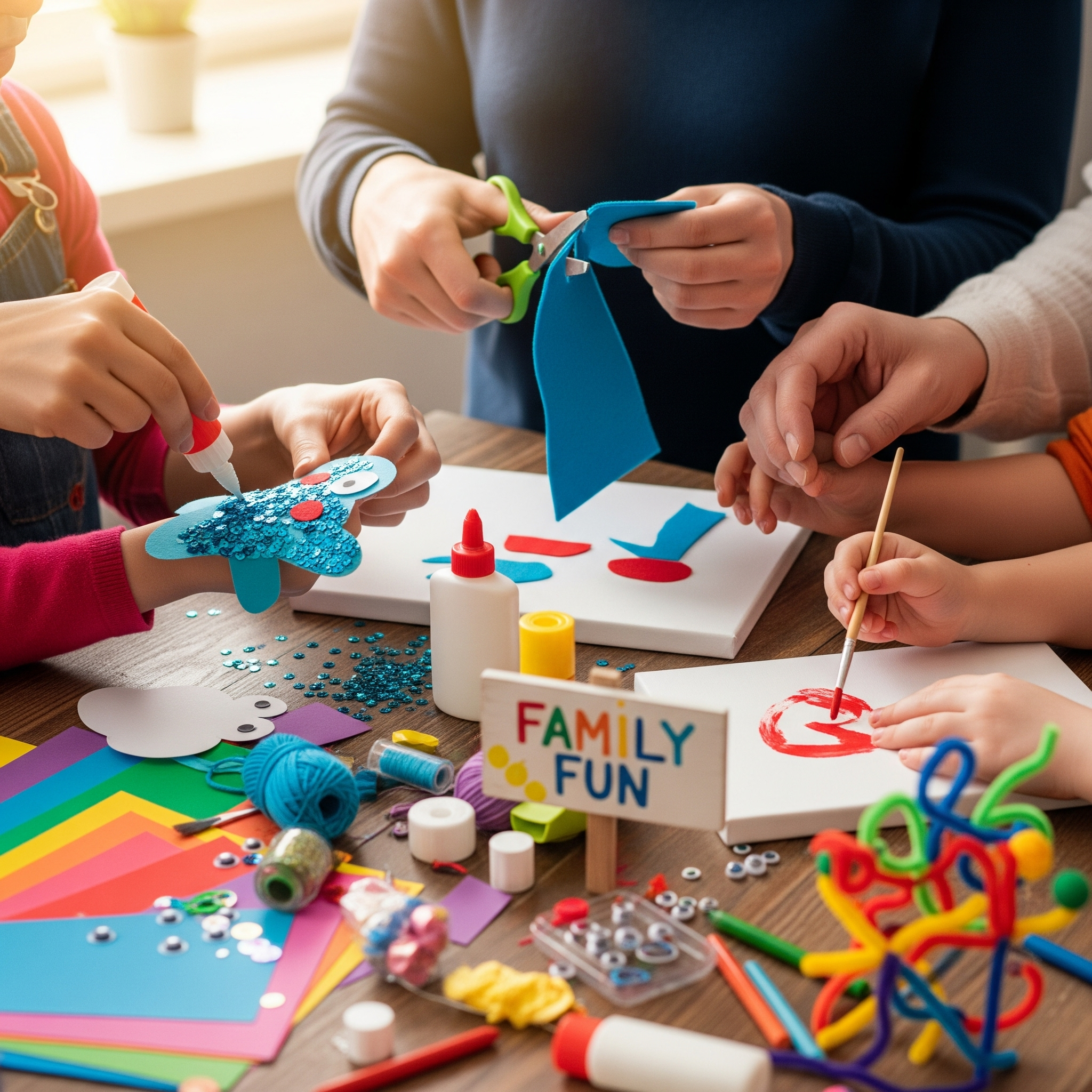
As you embark on your family’s crafting journey, remember that you’re not just filling time or creating cute decorations—you’re investing in your children’s cognitive development, emotional well-being, and creative confidence. You’re providing healthy alternatives to screen time, building family bonds through shared creative experiences, and teaching valuable lessons about persistence, problem-solving, and self-expression. You’re showing children that they don’t need expensive toys or constant digital stimulation to experience joy and engagement—that they carry creativity within themselves, ready to be expressed with simple materials and their own imagination. These lessons, learned naturally through play and exploration, become foundational beliefs that shape how children see themselves and approach the world. So gather those simple supplies, set aside that dedicated time, silence those anxieties about mess and perfection, and embrace the beautiful, meaningful, developmentally rich experience of crafting with children. The skills, memories, and joy you create together will last far longer than any screen-based entertainment ever could, building a creative legacy that your children will carry—and hopefully pass on—throughout their entire lives.
Hashtags to Share and Discover More Kid-Friendly Crafts
Connect with the vibrant community of parents, educators, and craft enthusiasts sharing creative inspiration and screen-free activity ideas across social media platforms. Use these hashtags to discover new projects, share your children’s creations, find troubleshooting advice, and join conversations about childhood development and creative education. Whether you’re looking for seasonal craft ideas, age-specific projects, or simply want to celebrate your child’s latest masterpiece, these hashtags will connect you with a supportive community of like-minded individuals who value hands-on creativity and child development through artistic expression.

#KidsCrafts
The most comprehensive general hashtag for children’s craft projects of all types, ages, and skill levels. Perfect for discovering inspiration and sharing your own creations.
#ScreenFreeFun
Focuses specifically on activities that provide engaging alternatives to digital devices, promoting healthy childhood development through hands-on experiences.
#CreativeKids
Celebrates children’s creativity across all mediums, emphasizing the development of imagination, original thinking, and artistic confidence in young people.
#ChildDevelopment
Connects crafting to broader discussions about cognitive, physical, emotional, and social growth, highlighting the educational value of creative activities.
#DIYKidsProjects
Features do-it-yourself craft ideas and tutorials specifically designed for children’s abilities and interests, often using everyday household materials.
#CraftingWithKids
Emphasizes the collaborative nature of adult-child crafting experiences and family bonding through creative projects
#FineMotorSkills
Focuses on activities that develop hand-eye coordination, dexterity, and the physical skills essential for writing and daily tasks
#ParentingTips
Broader parenting advice that often includes creative activity ideas alongside other developmental and family wellness strategies
#ArtForKids
Covers artistic activities, techniques, and educational approaches to teaching children about art and creative expression
#HandsOnLearning
Emphasizes experiential, tactile educational approaches that make learning concrete and memorable through physical engagement
When sharing your own crafting experiences online, consider including multiple relevant hashtags to maximize visibility and connect with different communities. Combine general tags like #KidsCrafts with more specific ones related to the materials used (#RecycledCrafts), the occasion (#HalloweenCrafts), or the age group (#ToddlerActivities). Don’t forget to engage with other posts using these hashtags—comment on projects you admire, ask questions when you need advice, and offer encouragement to other parents and educators navigating the creative journey with children. Social media can be a powerful tool for building supportive communities around positive, developmental activities that truly benefit our children’s growth and well-being.
📱 Using Social Media Mindfully
While these hashtags help you discover inspiration and share achievements, remember to model healthy technology use for your children. Set boundaries around device use during actual crafting time, keeping the focus on hands-on creation rather than documentation. Take photos to share later rather than constantly interrupting creative flow. Use social media as a tool to enhance real-world activities, not replace them, demonstrating balanced digital habits your children will emulate.
Beyond social media, these hashtags represent a growing movement of parents, educators, and child development advocates committed to preserving and promoting hands-on creativity in an increasingly digital world. By using and following these tags, you’re joining a community that values screen-free activities, understands the developmental importance of creative play, and actively works to provide children with rich, engaging alternatives to passive entertainment. This community shares your commitment to raising confident, creative, capable young people equipped with the skills and attitudes they’ll need to thrive in whatever future they create. Welcome to the crafting community—we’re so glad you’re here!
 NellyWorld
Leave a comment