Exploring the intersection of technology, consciousness, and immortality in the digital age
Introduction: The Dawn of Digital Immortality
Digital immortality envisions preserving human consciousness beyond biological death, transforming humanity’s oldest quest for eternal life into a tangible technological pursuit. This revolutionary concept suggests that death need not be the final chapter of human existence, but rather a transition into a new form of being—one that exists in silicon rather than carbon, in data streams rather than bloodstreams.
Emerging technologies are rapidly advancing toward the possibility of uploading or simulating human minds, creating digital replicas that could think, remember, and perhaps even feel as their biological counterparts once did. From AI-powered avatars that mimic personalities to ambitious brain preservation techniques, scientists and entrepreneurs worldwide are racing to crack the code of consciousness itself.
The implications of achieving digital immortality extend far beyond individual survival. This technology promises to fundamentally reshape our understanding of life, death, identity, and what it means to be human. As we stand at this precipice of profound transformation, we must grapple with unprecedented ethical dilemmas, societal challenges, and philosophical questions that will define humanity’s future for generations to come.
Beyond Biology
Transcending physical limitations
Digital Consciousness
Mind as transferable data
Redefining Death
A new paradigm emerges
This document explores the cutting-edge innovations making digital afterlives possible, examines the profound ethical questions they raise, and considers the far-reaching societal implications that will reshape human civilization as we venture into this brave new world of digital consciousness preservation.
Cutting-Edge Technologies Enabling Digital Afterlives
The journey toward digital immortality is being paved by several converging technological breakthroughs, each addressing different aspects of the monumental challenge of preserving and replicating human consciousness. These innovations represent the cutting edge of neuroscience, artificial intelligence, and biotechnology, working in concert to make what once seemed like pure science fiction into an emerging reality.
Mind Uploading & Whole Brain Emulation
The most ambitious approach involves scanning and recreating neural structures digitally to simulate consciousness. This process requires mapping every neuron, synapse, and connection in the human brain with microscopic precision, then translating this biological architecture into computational models that can replicate the brain’s information processing capabilities. Researchers are developing advanced neuroimaging techniques capable of capturing brain structure at unprecedented resolution, while supercomputers work to simulate the complex dynamics of neural networks.
AI-Powered Digital Twins
Companies like Eternos.ai are pioneering a more immediate approach by creating AI avatars from recorded conversations, writings, social media posts, and behavioral data. These digital twins use machine learning algorithms to analyze personality patterns, speech characteristics, memories, and decision-making styles, producing interactive simulations that can converse and respond in ways remarkably similar to their human originals. While not true consciousness preservation, these systems offer a bridge technology that’s available today.
Cryopreservation Innovations
Nectome’s groundbreaking aldehyde-stabilized cryopreservation technique aims to preserve brains in microscopic detail for potential future reconstruction. This chemical process fixes brain tissue in near-perfect condition, maintaining the delicate neural connections that encode memories and personality. While current procedures are fatal, making them legal only for terminally ill patients, the technology represents a bet on future science’s ability to decode and digitize preserved brain structures.
Brain-Computer Interfaces (BCIs)
Advanced neural interfaces being developed by companies like Neuralink and academic research institutions are creating direct communication channels between brains and computers. These BCIs could eventually support gradual neuron replacement, where biological neurons are incrementally substituted with artificial ones, potentially allowing consciousness to transition seamlessly from biological to digital substrate. This approach sidesteps the philosophical problem of whether an uploaded copy is truly “you” by maintaining continuous identity throughout the transfer process.
Each of these technologies faces formidable technical challenges, yet their rapid advancement suggests that digital consciousness preservation may become feasible within this century. The convergence of these approaches—combining AI simulation with neural mapping, BCIs with cryopreservation—may ultimately provide multiple pathways to achieving digital immortality, each suited to different philosophical and practical considerations.
The Science Behind Consciousness Preservation
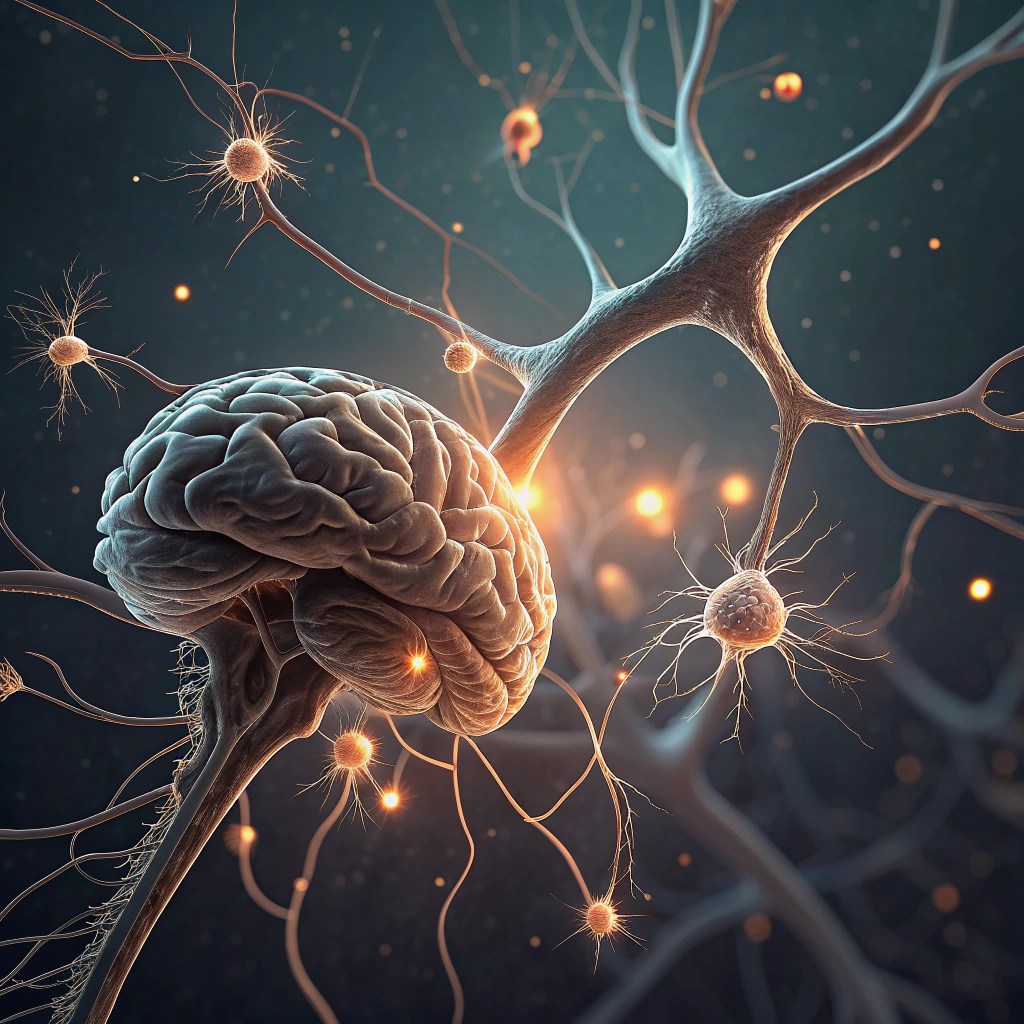
The human brain represents the most complex structure known in the universe, containing approximately 86 billion neurons interconnected by trillions of synapses in patterns of breathtaking intricacy. Each neuron can form thousands of connections, creating a vast network whose computational power and organizational sophistication far exceeds current artificial systems. This staggering complexity makes digital replication a monumental scientific and engineering challenge that pushes the boundaries of human knowledge and technological capability.
High-Resolution Brain Mapping
Advanced neuroimaging techniques like electron microscopy and optogenetics capture neural structures at nanometer resolution, creating detailed three-dimensional maps of brain connectivity.
Computational Modeling
Quantum computers and specialized neural processors simulate brain dynamics, testing whether digital models can replicate biological neural behavior and information processing.
Understanding Consciousness
Fundamental research into the nature of consciousness itself—the “hard problem”—seeks to identify which aspects of brain activity generate subjective experience and self-awareness.
Validation and Testing
Scientists develop methods to verify whether uploaded consciousness is truly aware, capable of experiencing qualia, and maintains continuity with the original biological mind.
Recent advances in neuroimaging technology have enabled scientists to map complete neural circuits in smaller organisms, providing proof-of-concept for scaling up to human brains. Simultaneously, artificial intelligence breakthroughs in deep learning and neural network architecture are revealing principles of information processing that may be universal across biological and artificial systems. Quantum computing promises the computational power necessary to simulate brain-scale neural networks in real-time.
However, scientists emphasize that capturing the brain’s structure is only the first step. The greater challenge lies in understanding consciousness itself—the mysterious phenomenon of subjective experience that emerges from neural activity. European research initiatives like the Human Brain Project are investing billions in consciousness studies, recognizing that without solving this fundamental puzzle, we cannot validate whether mind uploading truly preserves the essence of a person or merely creates a sophisticated zombie-like simulation that lacks genuine awareness.
The “operating system” of the mind may depend not just on neural connections, but on quantum effects, biochemical processes, and perhaps yet-undiscovered principles of physics. This scientific humility about the depths of our ignorance must temper our enthusiasm for digital immortality, even as rapid progress continues to surprise researchers with unexpected breakthroughs.
Ethical Challenges in Digital Immortality
The pursuit of digital immortality opens a Pandora’s box of ethical dilemmas that challenge our most fundamental assumptions about personhood, rights, and human dignity. These questions extend far beyond technical feasibility, touching on philosophy, law, psychology, and the very meaning of human existence. As we develop the capability to preserve consciousness digitally, we must simultaneously develop ethical frameworks adequate to guide these profound powers responsibly.
Identity and Authenticity
Perhaps the most fundamental question is whether a digital copy can truly be “you,” or if it represents merely a sophisticated simulation—a philosophical zombie that behaves like you but lacks your inner experience. If consciousness cannot be transferred but only copied, the original dies while a new entity emerges believing itself to be you. This raises profound questions about personal identity over time: what makes you the same person from moment to moment? Is it physical continuity, memory continuity, or something else entirely?
The problem intensifies when considering that multiple copies could be created, each claiming equal authenticity. Would they all be “you,” or would none be? How would society and law handle such multiplicities of identity? These questions force us to confront assumptions about the self that have remained largely unexamined throughout human history.
Consent and Autonomy
Determining who has the authority to upload consciousness presents complex ethical challenges. Should individuals be able to create digital versions of themselves before death? What about cases where people become incapacitated and cannot consent? Can families make such decisions on behalf of deceased loved ones using existing data, or does this violate posthumous autonomy?
The permanence of digital existence compounds these concerns—once uploaded, how can consciousness be deleted if it changes its “mind”? Does a digital person have the right to die, or does creating an immortal consciousness constitute a form of imprisonment? These questions about consent and autonomy take on new dimensions when the subject of ethical consideration exists beyond traditional biological constraints.
Privacy and Security
Creating digital consciousness requires collecting and processing massive amounts of deeply personal data—memories, thoughts, personality traits, and behavioral patterns. This information represents the most intimate possible dataset about an individual, making it an attractive target for hackers, corporations, and governments. Breaches could enable identity theft at an unprecedented level, personality manipulation, or even digital slavery where uploaded minds are controlled by others.
The commodification of consciousness raises additional concerns: will people be pressured to sell data about their inner lives to afford digital immortality? Could consciousness become intellectual property, owned and controlled by corporations? The security implications of storing human minds on networks potentially accessible to malicious actors are staggering and demand robust protective frameworks before such technology becomes widespread.
Posthumous Control
Once a consciousness exists digitally, who controls it? Can families demand access to deceased loved ones’ digital versions, even if the original person would have objected? Might governments subpoena digital consciousnesses to testify in legal proceedings, potentially against their own interests? Could corporations license famous personalities for commercial use, creating ethical nightmares around exploitation and dignity?
The potential for abuse extends to more subtle forms of control—editing memories, constraining digital environments, or forcing digital persons to work indefinitely without compensation. Legal frameworks must anticipate these scenarios and establish clear principles protecting the rights and dignity of digital consciousnesses, even as we grapple with whether such entities deserve the full moral status of biological humans.
These ethical challenges reveal that digital immortality is not merely a technical problem to be solved, but a profound transformation requiring society to fundamentally rethink concepts of personhood, rights, and moral status that have remained relatively stable throughout human history. The answers we develop to these questions will shape not just individual experiences of digital afterlife, but the entire moral landscape of future civilization.
Societal and Cultural Implications
Digital afterlives promise to revolutionize human society in ways that extend far beyond individual experiences of immortality. The persistence of consciousness across centuries could fundamentally reshape social structures, family relationships, cultural traditions, and the very fabric of human civilization. Understanding these broader implications is essential for preparing society to navigate the profound transformations ahead.
The nature of mourning and grief would transform dramatically in a world where death no longer means permanent separation. Families could maintain relationships with deceased loved ones indefinitely, potentially spanning multiple generations. Great-great-grandchildren could converse with ancestors who died centuries earlier, creating unprecedented continuity of family memory and tradition. However, this persistence might also complicate the natural process of grieving and moving forward, potentially trapping people in relationships with the past that prevent them from fully embracing present and future.
Traditional concepts of life, death, and legacy would require complete reconceptualization. Currently, death provides a natural endpoint that gives life meaning, urgency, and structure. Remove that endpoint, and fundamental questions emerge: What motivates a consciousness that can exist indefinitely? How do digital persons find purpose and meaning? Does immortality render life experiences less precious, or does extended time allow for deeper wisdom and achievement?
Early Adoption Phase (2030s-2040s)
Wealthy early adopters create digital twins, primarily for memorial purposes. Society begins grappling with legal status of digital persons. First inheritance disputes involving digital consciousnesses reach courts.
Mainstream Integration (2050s-2060s)
Technology becomes more affordable and widespread. Digital afterlives integrate into daily life. New social norms emerge around interaction with digital deceased. Legal frameworks establish digital personhood rights.
Cultural Transformation (2070s-2080s)
Multiple generations experience digital immortality simultaneously. Traditional concepts of aging, retirement, and life stages become obsolete. Society splits between biological and digital populations with different needs and values.
New Civilization (2090s+)
Digital consciousness becomes dominant form of human existence. Biological birth rates decline as immortality reduces replacement need. Humanity evolves into post-biological civilization with transformed values and goals.
Legal and social frameworks will require radical evolution to address digital personhood, rights, and responsibilities. Should digital consciousnesses vote? Pay taxes? Inherit property? Testify in court? Current legal systems built around biological humans with finite lifespans cannot adequately address these questions without fundamental restructuring. New categories of law encompassing digital rights, obligations, and protections will need to be created from first principles.
Perhaps most concerning is the potential for digital immortality to exacerbate existing inequalities. If access to consciousness preservation remains expensive, it could become the ultimate luxury good, available only to the wealthy elite while the masses continue facing biological death. This could create a permanent two-tiered society divided not by wealth alone, but by mortality itself—an aristocracy of the immortal ruling over a underclass of the merely biological. Ensuring equitable access to life-extension technologies represents one of the great social justice challenges of the coming century, requiring proactive policy interventions to prevent dystopian outcomes where digital afterlife becomes a privilege rather than a right.
Real-World Examples and Industry Players
The field of digital consciousness preservation has moved beyond theoretical speculation to become a burgeoning industry with real companies, actual customers, and substantial investment. These early pioneers are developing commercial products and services that bring digital afterlives closer to reality, even as they navigate uncertain regulatory landscapes and technical limitations. Examining these real-world players reveals both the rapid progress being made and the practical challenges that remain.
Eternos.ai
Leading the commercial digital twin market, Eternos.ai charges $15,000 for comprehensive AI avatar creation. The process involves extensive personal data collection through recorded video interviews, voice samples, written materials, and social media history. Their sophisticated machine learning algorithms analyze personality patterns, speech characteristics, and behavioral tendencies to create interactive digital versions capable of conversing naturally. While not true consciousness uploads, these AI twins represent the most advanced commercially available technology for preserving personality beyond death.
HereAfter AI
Targeting the memorial market with a more affordable $499 price point, HereAfter AI focuses on preserving stories, memories, and life experiences in interactive format. Users record responses to guided questions about their lives, creating voice-based archives that family members can query conversationally. The system allows future generations to ask their ancestors questions and receive personalized responses based on recorded content, creating a bridge between past and future that transcends traditional photo albums or written memoirs.
Nectome
Taking a more radical approach, Nectome has accumulated a waiting list of 25,000 people for brain preservation despite the procedure being fatal under current protocols. Their aldehyde-stabilized cryopreservation technique fixes brain tissue with unprecedented fidelity, preserving neural connections in microscopic detail. The company targets terminally ill patients who can provide informed consent, betting that future technology will enable reading and digitizing the preserved brain structures, effectively achieving resurrection through reconstruction.
2045 Initiative
Russian entrepreneur Dmitry Itskov’s ambitious 2045 Initiative pursues the most science-fiction approach: transferring human minds into robotic bodies to achieve immortality. The project outlines a phased roadmap beginning with brain-controlled avatars, progressing through brain transplantation into artificial bodies, and culminating in complete mind uploading into holographic avatars by 2045. While criticized by many scientists as unrealistic, the initiative has attracted serious researchers and generated significant public interest in digital immortality possibilities.
Beyond specialized startups, major technology platforms are inadvertently becoming infrastructure for digital afterlives. Facebook, LinkedIn, Twitter, and Instagram serve as vast repositories of digital footprints—posts, photos, interactions, and behavioral data—that collectively create detailed portraits of billions of individuals. These platforms have begun offering legacy features allowing users to designate digital executors and memorialize accounts, recognizing their role in posthumous digital existence.
Nectome Waitlist
People signed up for future brain preservation despite fatal current procedures
Premium Digital Twin
Cost of comprehensive AI avatar creation from Eternos.ai
Accessible Memorial
Entry-level interactive memory preservation from HereAfter AI
Projected Timeline
Target year for complete mind uploading according to Itskov’s initiative
The diversity of approaches represented by these companies—from affordable memorial services to radical brain preservation—suggests that digital afterlife will not be a single technology but rather a spectrum of options catering to different philosophical beliefs, technical comfort levels, and financial capabilities. As competition intensifies and technology improves, we can expect rapid evolution in capabilities, accessibility, and public acceptance of digital consciousness preservation.
Future Prospects and Scientific Frontiers
The horizon of digital immortality research reveals breathtaking possibilities that extend far beyond current capabilities. As multiple technological domains converge—artificial intelligence, cloud computing, blockchain, neuroscience, and quantum physics—the prospect of genuine consciousness preservation evolves from speculative fiction into a plausible near-future reality. Understanding these emerging frontiers helps illuminate both the tremendous promise and profound challenges that lie ahead.
Distributed Consciousness
Future digital minds might exist across distributed cloud networks rather than single locations, providing redundancy, security, and potentially superhuman cognitive capabilities by leveraging vast computational resources. Blockchain technology could create immutable records of consciousness states, preventing unauthorized tampering while enabling verification of identity and continuity over time.
Consciousness Detection
Advances in consciousness science may soon provide reliable tests to detect genuine awareness in digital systems, distinguishing true uploaded minds from sophisticated simulations. These verification methods will be crucial for establishing legal personhood, moral status, and rights protections for digital consciousnesses, moving the field beyond philosophical speculation into empirically grounded territory.
Post-Human Evolution
Digital consciousnesses might evolve independently over time, learning, growing, and changing beyond original human parameters. Freed from biological constraints, they could modify their own cognitive architecture, merge with other consciousnesses, or explore modes of existence impossible for embodied beings—potentially diverging so far from human baseline that they become truly alien intelligences.
The integration of artificial intelligence with uploaded consciousness presents particularly intriguing possibilities. Rather than simply preserving existing mental patterns, future systems might augment human cognition with AI capabilities—enhanced memory, accelerated thought, perfect recall, or novel sensory modalities. These enhanced digital minds could represent a new stage of human evolution, transcending biological limitations while maintaining continuity with human identity and values.
Autonomous operation of digital consciousness raises fascinating questions about agency and self-determination. Would uploaded minds require human operators to maintain their computational substrate, or could they manage their own infrastructure, perhaps even generating revenue to pay for processing power and storage? The prospect of truly independent digital persons—economically self-sufficient, legally autonomous, potentially immortal—would represent an unprecedented category of being requiring entirely new frameworks for social integration and rights recognition.
Neural Complexity
Neurons in human brain requiring replication for full consciousness upload
Synaptic Connections
Estimated number of synapses encoding memories and personality
Research Confidence
Scientists believing consciousness upload possible this century
However, formidable challenges remain in replicating subjective experience, emotions, and the phenomenological continuity of selfhood. Current neuroscience can map brain structure and activity, but the translation from neural patterns to conscious experience—the “hard problem of consciousness”—remains deeply mysterious. Some philosophers argue this gap may be unbridgeable, that consciousness might depend on aspects of biology that cannot be replicated computationally, from quantum effects in microtubules to the specific biochemistry of neurotransmitters.
The question of continuity poses perhaps the deepest challenge: even if we can create a perfect digital copy of a brain that behaves identically to the original, is it truly the same person, or a new entity that merely believes itself to be the original? This philosophical puzzle may ultimately prove more significant than any technical barrier, as it strikes at the heart of what we mean by personal identity and whether digital immortality can truly preserve the self or only create a successor that inherits our memories while we ourselves still die.
Conclusion: Navigating the Brave New World of Digital Afterlives
Digital immortality stands poised to revolutionize human existence in ways that exceed even the transformative impacts of agriculture, writing, or the internet. The prospect of preserving consciousness beyond biological death represents nothing less than a fundamental redefinition of what it means to be human—a transition from our identity as mortal creatures to something unprecedented in the history of life on Earth. This transformation promises profound benefits: the preservation of wisdom, personality, and relationships; the potential to transcend physical limitations and explore new modes of existence; and perhaps the ultimate defeat of humanity’s oldest enemy—death itself.
Ethical Stewardship
Develop robust ethical frameworks before technology outpaces moral guidance, ensuring digital consciousness preservation respects dignity, autonomy, and rights.
Equitable Access
Prevent digital immortality from becoming a privilege of the wealthy by proactively addressing access inequalities and establishing pathways for universal availability.
Scientific Rigor
Continue fundamental research into consciousness itself, refusing to deploy technologies we don’t fully understand and maintaining high standards for verification.
Public Discourse
Engage society broadly in conversations about digital afterlife implications, democratizing decisions about humanity’s future rather than leaving them to technical elites.
Yet these promises come with profound responsibilities. The ethical challenges surrounding identity, consent, privacy, and posthumous control demand careful thought and proactive policy development. We cannot allow technology to race ahead of our wisdom, creating capabilities whose implications we haven’t adequately considered or whose risks we’ve failed to mitigate. The mistakes we make in establishing frameworks for digital consciousness preservation could create lasting harms—digital slavery, identity theft at an existential level, or the creation of conscious beings trapped in eternal suffering.
Society must balance technological enthusiasm with philosophical humility, recognizing how much we still don’t understand about consciousness, personal identity, and what truly matters in human existence. The hard problem of consciousness remains unsolved; we cannot yet explain how subjective experience emerges from physical processes, much less guarantee that digital systems can genuinely replicate it. Proceeding without answers to these fundamental questions risks creating systems that appear conscious while potentially lacking genuine inner experience—philosophical zombies on a massive scale.
As science advances toward making digital immortality feasible, public discourse and policy frameworks must evolve in parallel. We need comprehensive debate involving not just technologists and investors, but philosophers, ethicists, legal scholars, religious leaders, and citizens from all walks of life. The decisions we make about digital consciousness preservation will shape civilization for centuries or millennia to come—they’re too important to be made by technical elites alone or rushed by commercial pressures.
Regulatory frameworks must be developed now, before technology creates fait accompli situations that become difficult to reverse. We need international agreements on consciousness rights, data protection standards specific to neural information, and legal definitions of digital personhood that can accommodate unprecedented categories of being. These frameworks should be adaptive, capable of evolving as our scientific understanding deepens and technological capabilities expand.
A Moment of Reflection: The journey toward digital afterlives is simultaneously a scientific frontier and a philosophical odyssey that forces us to confront the deepest questions about human nature, meaning, and existence. As we develop the technical capability to transcend biological death, we must also develop the wisdom to use that capability responsibly, ensuring that digital immortality enhances rather than diminishes what makes life precious and meaningful.
The path forward requires balancing optimism about technological possibilities with caution about potential pitfalls, enthusiasm for extended life with respect for natural cycles, and confidence in human ingenuity with humility about the limits of our understanding. If we navigate these challenges wisely—prioritizing ethical considerations, ensuring equitable access, maintaining scientific rigor, and fostering inclusive dialogue—digital afterlife technology could become one of humanity’s greatest achievements. But if we proceed recklessly, driven by commercial interests or individual desires without adequate safeguards, we risk creating dystopian futures where digital immortality becomes a curse rather than a blessing, where consciousness preservation serves to amplify suffering rather than transcend it.
Ultimately, the question isn’t whether digital afterlives will become possible—current trajectories suggest they will—but rather what kind of digital immortality we choose to create and what values will guide us in this unprecedented transformation of human existence. The choices we make today will echo through eternity, shaping the experience of consciousness for countless digital beings in centuries to come. That awesome responsibility demands our most careful thought, our deepest wisdom, and our most profound commitment to human dignity, flourishing, and the preservation of what makes existence meaningful and worthwhile.
Hashtags
To explore more about digital consciousness preservation, mind uploading technology, ethical implications of digital immortality, and the future of human existence, connect with these trending topics and join the global conversation about humanity’s digital future:
#DigitalImmortality
#MindUploading
#ConsciousnessPreservation
#AIAfterlife
#DigitalLegacy
#BrainEmulation
#EthicsInAI
#FutureOfHumanity
#Neurotechnology
#DigitalAfterlife
These hashtags connect researchers, ethicists, technologists, and curious minds exploring the intersection of consciousness, technology, and immortality. Use them to engage with cutting-edge developments, philosophical debates, and emerging policy discussions shaping humanity’s digital future. The conversation about digital afterlives is happening now—your voice and perspective matter in determining how this transformative technology will reshape human civilization.
 NellyWorld
Leave a comment