Demystifying quantum computing’s revolutionary potential to transform everything from medicine and cryptography to our understanding of physics itself.
Introduction: The Dawn of a Quantum Revolution
We stand at the threshold of a technological revolution that promises to fundamentally reshape our world. Quantum computing represents far more than incremental progress in computational power—it embodies a complete paradigm shift in how we process information and solve problems. By harnessing the bizarre and counterintuitive laws of quantum mechanics, these revolutionary machines are poised to transform fields as diverse as medicine, cryptography, artificial intelligence, and our very understanding of physics itself.
Quantum Mechanics Foundation
Leveraging superposition and entanglement—phenomena where particles exist in multiple states simultaneously and remain mysteriously connected across vast distances
Revolutionary Qubits
Unlike classical bits limited to 0 or 1, quantum bits exploit quantum properties to process exponentially more information simultaneously
Solving the Impossible
Tackling problems once deemed computationally intractable—from drug discovery to climate modeling to cryptographic challenges
Traditional computers, no matter how powerful, are fundamentally constrained by classical physics. They process information sequentially, plodding through calculations one step at a time. Quantum computers, by contrast, can explore multiple solutions simultaneously, dramatically accelerating problem-solving for specific types of challenges. This document will guide you through the science driving this revolution, the breakthrough milestones already achieved, the massive investments fueling development, and the real-world applications beginning to emerge. The quantum era isn’t a distant future—it’s arriving now, and understanding its implications is essential for anyone looking to navigate the technological landscape of tomorrow.
The Science Behind Quantum Computing: From Theory to Reality
The story of quantum computing begins over a century ago, when physicists like Max Planck, Niels Bohr, and Albert Einstein uncovered the strange rules governing the subatomic world. Quantum mechanics revealed that at the smallest scales, particles don’t behave like tiny billiard balls following predictable paths. Instead, they exhibit wave-particle duality, existing in fuzzy probabilistic states until observed. This revelation, initially met with skepticism even from its pioneers, laid the theoretical groundwork for quantum computing.
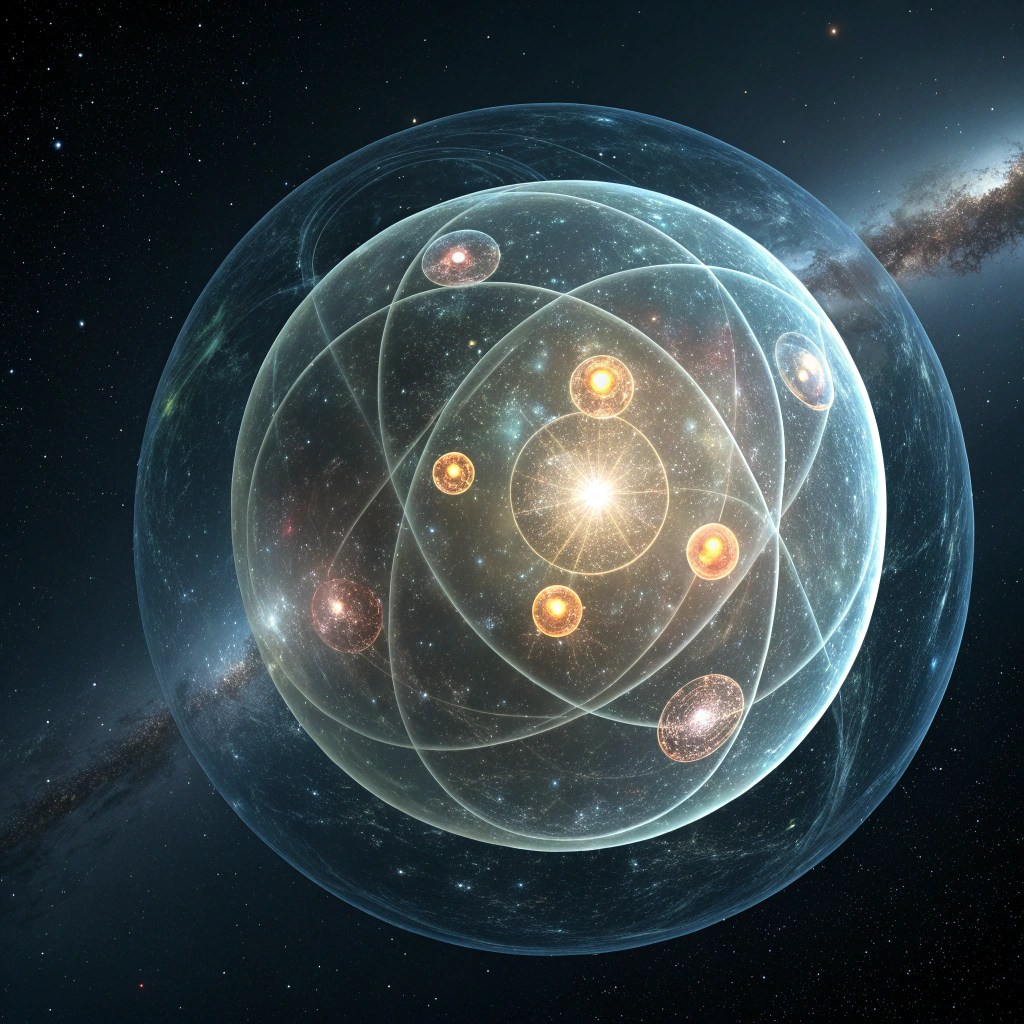
The heart of a quantum computer is the qubit—a quantum bit that can exist in a superposition of both 0 and 1 states simultaneously. While a classical bit must be definitively one or the other, a qubit can be both, exponentially expanding computational possibilities. When you have just two qubits, they can represent four states at once; three qubits represent eight states; and so on, scaling exponentially. This property, combined with entanglement—where qubits become correlated such that measuring one instantly affects others, regardless of distance—creates computational power that grows explosively with each additional qubit.
Early 20th Century
Quantum mechanics developed by Planck, Bohr, Einstein, and Heisenberg reveals particle-wave duality and probabilistic nature of reality
1980s
Richard Feynman and David Deutsch propose quantum computers could simulate quantum systems classical computers cannot
1990s-2000s
Shor’s algorithm (factoring) and Grover’s algorithm (searching) demonstrate quantum computational advantages
2010s-Present
Quantum Error Correction breakthroughs enable reliable computation, protecting fragile quantum states from decoherence
Yet qubits are extraordinarily fragile. Environmental noise—heat, electromagnetic radiation, even cosmic rays—can cause decoherence, destroying quantum states in microseconds. This challenge seemed insurmountable until researchers at institutions like Stanford, IBM, and Google pioneered Quantum Error Correction (QEC). QEC uses redundant qubits to detect and correct errors without directly measuring the qubits, preserving their quantum nature. This breakthrough transformed quantum computing from a theoretical curiosity into an engineering reality, paving the way for the machines operating today and the far more powerful systems on the horizon.
Breakthrough Milestones: Proofs of Quantum Supremacy
The journey from theoretical possibility to practical quantum computing has been marked by a series of stunning breakthroughs that have consistently exceeded expectations. These milestones aren’t just incremental improvements—they represent quantum leaps that prove quantum computers can achieve what was previously impossible, cementing their place as transformative technologies rather than laboratory curiosities.
Google’s Quantum Supremacy (October 2019)
Google’s Sycamore processor, with 53 qubits, performed a highly specialized calculation in 200 seconds that would take the world’s most powerful classical supercomputers approximately 10,000 years. This historic moment marked the first definitive demonstration of “quantum supremacy”—solving a problem beyond classical reach.
IBM’s 1,000-Qubit Processor (2025)
IBM unveiled its groundbreaking Condor processor featuring over 1,000 qubits, dramatically scaling up quantum hardware while improving qubit coherence times. This achievement demonstrated that quantum systems could grow larger while maintaining the delicate quantum states necessary for computation.
China’s Quantum Teleportation Record
Chinese scientists successfully demonstrated quantum teleportation across 1,400 kilometers, transmitting quantum information through entangled particles over unprecedented distances. This breakthrough advances the feasibility of global quantum communication networks and unhackable encryption systems.
Google’s Willow Chip & Quantum Echoes (2025)
Google’s next-generation Willow chip, combined with the revolutionary Quantum Echoes algorithm, ran simulations 13,000 times faster than top classical supercomputers. This enabled practical breakthroughs in molecular simulation for drug discovery, demonstrating real-world applications beyond benchmark problems.
“What we’re witnessing isn’t just faster computation—it’s a fundamentally new way of solving problems that were previously intractable. Quantum supremacy experiments prove the theory works; the next phase is making it practical and accessible.”
These milestones collectively demonstrate that quantum computing has transitioned from “if” to “when” and “how.” The rapid pace of advancement—from tens of qubits to over a thousand in just a few years—suggests the quantum revolution is accelerating faster than many experts predicted. Each breakthrough builds on previous achievements, creating momentum that attracts investment, talent, and attention from governments and industries worldwide.
The Quantum Investment Boom: A $20 Billion Market by 2030
Market Trajectory
The quantum computing sector is experiencing unprecedented growth, signaling investor confidence that this technology is transitioning rapidly from speculative research to commercial viability and transformative applications.
Money talks, and in quantum computing, it’s shouting. The global quantum computing market was valued at $3.52 billion in 2025 and industry analysts project explosive growth to $20.20 billion by 2030—representing a compound annual growth rate (CAGR) of 41.8%. This isn’t speculative bubble territory; it’s driven by concrete breakthroughs, expanding applications, and strategic positioning by major corporations and governments recognizing quantum computing as a foundational technology for the 21st century.
Venture Capital Investment
Total VC funding through September 2025, a 50% increase over 2024, fueling startups and innovation
JPMorgan Chase Commitment
Financial sector leader’s multi-year investment in quantum technologies and applications
Annual Growth Rate
CAGR demonstrating the sector’s extraordinary expansion trajectory through 2030
Venture capital has flooded into the sector, with funding reaching $3.77 billion by September 2025—a remarkable 50% increase over the previous year. Major financial institutions like JPMorgan Chase have committed up to $10 billion in quantum-related technologies, recognizing the potential to revolutionize everything from portfolio optimization to fraud detection and cryptographic security.
Government investment has been equally dramatic. China has established a massive $138 billion national quantum fund, integrating quantum computing into its strategic technological priorities. Japan committed $7.4 billion to quantum research and infrastructure. The United States launched the National Quantum Initiative with $1.2 billion allocated over five years, while the European Union’s Quantum Flagship program deployed $1 billion over a decade to maintain competitive positioning. Australia, Canada, South Korea, Singapore, and other nations have followed suit, recognizing that quantum leadership could determine economic and security dominance in coming decades.
This capital influx is catalyzing rapid progress—funding hardware development, algorithm research, workforce training, and the ecosystem of startups building quantum applications. The message is clear: quantum computing is no longer a far-future technology but an imminent reality demanding immediate investment and strategic positioning.
Real-World Applications: Transforming Industries and Science
Quantum computing’s true promise lies not in abstract computational superiority but in solving real problems that affect human lives, economies, and planetary sustainability. As quantum systems mature, they’re beginning to tackle challenges that have confounded classical computers for decades, delivering breakthroughs across multiple sectors with profound implications.
Medicine & Drug Discovery
Quantum simulations can model complex molecular interactions with unprecedented accuracy, dramatically accelerating drug development. Simulating a molecule with just 70 atoms requires more states than there are atoms in the universe for classical computers—but quantum systems handle this naturally. This capability could reduce drug development timelines from 10-15 years to just 2-3 years, slashing costs by billions and bringing life-saving treatments to patients faster.
Cryptography & Cybersecurity
Quantum Key Distribution (QKD) leverages quantum entanglement to create theoretically unbreakable encryption. Any attempt to intercept the quantum key disturbs it detectably, ensuring absolute security. Financial institutions, governments, and defense organizations are deploying QKD networks to protect sensitive communications against both current and future quantum-powered attacks that could break today’s encryption standards.
Artificial Intelligence
Quantum AI combines quantum computing with machine learning to solve optimization problems classical AI cannot tackle efficiently. Applications include fraud detection analyzing millions of transaction patterns simultaneously, personalized medicine matching treatments to individual genetic profiles, and climate modeling incorporating vastly more variables for accurate predictions.
Supply Chain & Logistics Optimization
Quantum algorithms can optimize incredibly complex systems like global supply chains, energy grids, and urban traffic networks. Israel recently piloted a quantum-powered traffic management system that analyzed vehicle flows in real-time across an entire city, reducing congestion by 18% and emissions by 12%. Similar applications could revolutionize shipping logistics, airline routing, and manufacturing supply chains, saving billions while reducing environmental impact.
Environmental Science & Climate
Enhanced climate-risk modeling becomes possible when quantum computers simulate atmospheric and oceanic systems with granular detail classical supercomputers cannot achieve. Resource exploration benefits from quantum-enhanced analysis of seismic and geological data, enabling more efficient discovery of critical materials needed for renewable energy technologies.
These applications aren’t distant possibilities—they’re actively being developed and tested. Early adopters are positioning themselves to gain competitive advantages as quantum computing transitions from experimental to production systems. The next five years will see these use cases mature from proof-of-concept to deployed solutions delivering measurable business and societal value.
Public Access and the Road Ahead
Democratization Through Cloud Platforms (2016-Present)
IBM Quantum Experience pioneered cloud-based quantum computing access, allowing researchers, students, and developers worldwide to program and run experiments on real quantum hardware remotely
Global Infrastructure Expansion (2025)
Over 100 quantum systems now operate globally—from industrial-grade machines in corporate labs to educational units in universities and schools, building a quantum-literate workforce
Near-Term Commercial Applications (2028-2030)
Experts predict practical commercial quantum applications within five years, with 300-500 qubit machines outperforming classical systems on specific high-value problems
Large-Scale Quantum Systems (2030s)
Million-qubit quantum computers may emerge, unlocking transformative applications across all major industries and scientific disciplines
One of quantum computing’s most remarkable aspects is how quickly it has democratized. Since IBM launched the Quantum Experience platform in 2016, anyone with internet access can write quantum programs and execute them on real quantum processors. This openness has accelerated innovation, enabled educational initiatives, and created a global community of quantum developers experimenting with algorithms and applications.
As of 2025, over 100 quantum computing systems operate worldwide in various capacities. These range from cutting-edge research machines pushing the boundaries of qubit counts and coherence times, to industrial-grade systems companies use for prototyping quantum applications, to educational units deployed in universities and even some high schools to build the quantum workforce of tomorrow.
The timeline for practical commercial quantum advantage is compressing. Industry experts now predict that within approximately five years—around 2030—quantum computers with 300-500 qubits will consistently outperform classical computers on economically valuable problems, not just academic benchmarks.
“We’re approaching the ‘quantum utility’ threshold—where quantum computers deliver practical value for real-world problems. Once crossed, adoption will accelerate rapidly as businesses see measurable returns on quantum investments.”
Looking further ahead, the 2030s may witness the emergence of large-scale quantum computers with millions of physical qubits supporting thousands of logical qubits after error correction. Such machines would tackle the most complex computational challenges in science and industry—from designing room-temperature superconductors to simulating entire ecosystems to optimizing national energy grids in real-time. The road ahead is not without obstacles, but the trajectory is clear: quantum computing is transitioning from experimental technology to computational infrastructure.
The Geopolitical Quantum Race: A New Frontier of Global Power
Quantum computing has sparked what some analysts call a “quantum cold war”—an intense global competition for technological supremacy with profound implications for economic prosperity, national security, and geopolitical power. Unlike previous technology races, quantum leadership isn’t merely about prestige; it represents potential dominance across military capabilities, financial systems, cryptographic security, and strategic industries for decades to come.
China: Massive State Investment
Leading with a $138 billion national quantum fund and integrated ecosystems spanning quantum computing, communication networks, and sensing technologies. Demonstrated quantum teleportation record and deployed quantum satellite communications.
United States: Private-Public Partnership
$1.2B National Quantum Initiative leverages tech giants like Google, IBM, Microsoft, and Amazon alongside national laboratories. Strong university research programs and venture capital ecosystem driving innovation.
European Union: Collaborative Framework
€1 billion Quantum Flagship program coordinates research across member states. Focus on quantum communication infrastructure and creating pan-European quantum ecosystem balancing innovation with ethical considerations.
China has taken an aggressive leadership position, viewing quantum technology as central to its technological independence and global influence strategy. Beyond the massive $138 billion fund, China has integrated quantum computing into its five-year strategic plans, built world-class research facilities, and demonstrated capabilities like quantum satellite communication that have surprised Western observers. The Chinese government’s ability to coordinate massive resources and align academic, military, and commercial sectors creates a formidable competitive advantage.
The United States has responded with the National Quantum Initiative and substantial investments through the Department of Energy, Department of Defense, and intelligence agencies. American tech giants—Google, IBM, Microsoft, Amazon, and others—have poured billions into quantum research, creating a dynamic private-sector quantum ecosystem. The U.S. model leverages its traditional strengths: entrepreneurial innovation, top-tier universities, and venture capital willing to fund high-risk, high-reward quantum startups.
Europe’s approach emphasizes collaboration through the Quantum Flagship program, coordinating research across member states while addressing ethical considerations and societal implications. Japan committed $7.4 billion and focuses on quantum sensing and communication applications. South Korea, Australia, Canada, Singapore, and other nations have launched their own quantum initiatives, recognizing that falling behind could mean exclusion from future technological standards and economic opportunities.
Economic Dominance
First-movers gain competitive advantages in quantum-enabled industries worth trillions
Military Superiority
Quantum sensors, communications, and computing enhance intelligence and defense capabilities
Cryptographic Control
Quantum computers could break current encryption; quantum networks provide absolute security
The strategic stakes are enormous. Quantum computers powerful enough to break current public-key cryptography could compromise financial systems, government communications, and military secrets. Conversely, quantum-secured networks would provide unhackable channels for sensitive information. Quantum sensors could detect submarines or map underground facilities with unprecedented precision. The nation or bloc that achieves quantum leadership may reshape global power dynamics as profoundly as nuclear weapons or the internet did in previous eras. This reality ensures the quantum race will only intensify in coming years, driving innovation but also raising concerns about quantum divides between technological haves and have-nots.
Challenges and the Path to Quantum Maturity
Despite extraordinary progress and breathtaking breakthroughs, quantum computing still faces formidable challenges on its path from experimental technology to mature, reliable computational infrastructure. Understanding these obstacles—and the innovative solutions emerging to overcome them—is essential for realistic expectations about timelines and capabilities.
Qubit Coherence & Decoherence
Quantum states are extraordinarily fragile, collapsing due to environmental noise within microseconds or milliseconds. Current systems require cooling to near absolute zero (15 millikelvin—colder than outer space) to maintain coherence. Extending coherence times while operating at higher temperatures remains a critical research frontier.
Error Rates & Quantum Error Correction
Quantum gates have error rates orders of magnitude higher than classical transistors. While Quantum Error Correction (QEC) can theoretically overcome this, it requires many physical qubits to encode each logical qubit. Current systems need roughly 1,000 physical qubits per logical qubit; reducing this overhead is crucial for scaling.
Scalable Hardware Engineering
Building quantum computers with millions of qubits requires solving immense engineering challenges—from manufacturing consistent high-quality qubits to wiring control systems to managing heat dissipation. No clear winner has emerged among competing qubit technologies (superconducting, trapped ion, photonic, topological, etc.).
Algorithm Development
For quantum computers to deliver practical value, we need quantum algorithms that provide significant speedups over classical approaches for problems businesses actually face. Algorithm development lags hardware progress, with relatively few proven quantum algorithms applicable to real-world use cases.
Breakthroughs are accelerating solutions to these challenges. Researchers are exploring novel materials and qubit designs—like diamond-based nitrogen-vacancy centers that operate at room temperature or topological qubits that are inherently more stable. Improved fabrication techniques are producing more consistent qubits with better coherence properties. Advanced error correction codes require fewer physical qubits per logical qubit, making large-scale quantum computers more feasible.

Collaboration among academia, industry, and government is essential for overcoming these hurdles. Open-source quantum software frameworks like Qiskit (IBM), Cirq (Google), and others enable global developer communities to experiment with quantum algorithms and applications, accelerating innovation. Universities are expanding quantum computing curricula to build the specialized workforce needed. Industry consortia are establishing standards and best practices to create a mature quantum ecosystem.
“The next decade will separate quantum computing hype from reality. Success requires not just better hardware, but algorithms that solve valuable problems, software tools that make quantum accessible, and trained professionals who can apply quantum thinking to real challenges.”
The challenges are significant but not insurmountable. Each year brings tangible progress—longer coherence times, lower error rates, larger qubit counts, and more sophisticated algorithms. The path to quantum maturity is clear, even if the exact timeline remains uncertain. What’s certain is that overcoming these challenges will require sustained investment, international collaboration, and creative problem-solving across multiple disciplines—physics, engineering, computer science, and mathematics.
Conclusion: Embracing the Quantum Future Today
Quantum computing represents far more than a technological advancement—it’s a paradigm shift in how we understand and manipulate information itself. By harnessing the bizarre principles of quantum mechanics, these revolutionary machines are unlocking solutions to humanity’s most complex and consequential problems, from discovering life-saving medicines to securing global communications to understanding the fundamental nature of reality.
Unprecedented Problem-Solving
Tackling challenges once deemed impossible for any computational system
Unbreakable Security
Quantum encryption protecting critical infrastructure and communications
Scientific Discovery
Accelerating research in physics, chemistry, materials science, and biology
Global Transformation
Reshaping industries, economies, and geopolitical power structures worldwide
Innovation Catalyst
Driving breakthroughs across AI, optimization, simulation, and beyond
The evidence is overwhelming: quantum computing has moved from theoretical speculation to engineering reality. The $20 billion market projection, billion-dollar government investments, breakthrough demonstrations of quantum supremacy, and emerging practical applications all point to the same conclusion—the quantum revolution is here, unfolding now.
Early adopters in business, science, and government stand to gain unprecedented advantages in innovation, efficiency, and security. Companies exploring quantum applications today are positioning themselves to lead tomorrow’s markets. Researchers leveraging quantum computing are making discoveries impossible with classical systems. Nations investing in quantum infrastructure are securing their technological sovereignty and economic competitiveness for decades to come.
For leaders and professionals across all sectors, understanding quantum computing’s principles and potential is no longer optional—it’s essential. The quantum era demands quantum literacy. Whether you’re in finance, healthcare, logistics, cybersecurity, or any field touched by computation, quantum technologies will reshape your industry. Those who understand and embrace these changes will thrive; those who ignore them risk obsolescence.
The quantum future isn’t something to wait for passively—it’s something to engage with actively, starting today. Explore cloud quantum platforms. Follow breakthrough announcements. Consider how quantum computing might transform your field. Invest in quantum education for yourself and your organization. The revolution is here, ready to unravel reality’s source code and reshape our world in ways we’re only beginning to imagine.
The quantum revolution is here—are you ready?
Hashtags
To maximize visibility and engagement for this comprehensive exploration of quantum computing, use these carefully curated hashtags across your digital platforms. Each hashtag connects to specific communities interested in quantum technology, innovation, and its transformative potential across industries.
#QuantumComputing
Core technology tag reaching quantum enthusiasts and professionals
#QuantumRevolution
Emphasizes transformative societal impact of quantum technology
#QuantumSupremacy
Highlights breakthrough milestones and computational advantages
#QuantumAI
Connects to artificial intelligence and machine learning communities
#QuantumCryptography
Reaches cybersecurity professionals and privacy advocates
#QuantumInvestment
Engages investors and business leaders tracking quantum markets
#QuantumTechnology
Broad tag covering hardware, software, and applications
#QuantumPhysics
Appeals to scientific community interested in foundational principles
#FutureOfComputing
Connects to broader technology trends and innovation discussions
#QuantumInnovation
Highlights creative applications and breakthrough achievements
These hashtags are optimized for search engine visibility and social media engagement. Use all ten consistently across LinkedIn, Twitter/X, Medium, industry blogs, and professional networks to maximize reach within quantum computing communities, technology enthusiasts, business leaders, researchers, and policymakers interested in this transformative field. The combination covers technical depth (#QuantumPhysics, #QuantumCryptography), business relevance (#QuantumInvestment, #FutureOfComputing), and inspirational framing (#QuantumRevolution, #QuantumInnovation) to engage diverse audiences interested in quantum computing’s multifaceted impact.
 NellyWorld
Leave a comment