How the optimistic solarpunk movement envisions eco-friendly urban environments powered by renewable technology and community cooperation.
Introduction: The Promise of Solarpunk
Solarpunk represents a radical reimagining of our urban future—one where gleaming solar panels adorn rooftops, vertical gardens cascade down building facades, and communities thrive in harmony with the natural world. This vibrant cultural movement emerged as a beacon of hope amid growing climate anxiety, offering a compelling counter-narrative to dystopian visions of environmental collapse.
At its core, Solarpunk envisions cities transformed into living ecosystems where renewable technology seamlessly integrates with organic life. Imagine neighborhoods where every surface generates clean energy, where food grows abundantly in communal gardens, and where public spaces buzz with cooperative enterprise. This isn’t mere fantasy—it’s a practical blueprint for sustainable urban development grounded in existing technologies and innovative design principles.
What sets Solarpunk apart from other environmental movements is its infectious optimism paired with actionable solutions. Rather than dwelling on apocalyptic scenarios, it celebrates human ingenuity and our capacity for positive change. The movement recognizes that creating eco-friendly cities requires more than technological innovation—it demands reimagining social structures, economic systems, and our relationship with the natural world.
Renewable Technology
Clean energy powering every aspect of urban life
Sustainable Design
Architecture that enhances ecological balance
Cooperation
Communities working together for shared prosperity
The Solarpunk movement counters dystopian narratives with a refreshing message: our future doesn’t have to be bleak. By combining cutting-edge renewable technology with time-tested principles of community cooperation and environmental stewardship, we can build cities that are not only sustainable but genuinely desirable places to live. This optimistic vision serves as both inspiration and instruction manual for the urban transformations our planet desperately needs.
The Origins and Philosophy of Solarpunk
The term “Solarpunk” first emerged in 2008, crystallizing a growing desire for hopeful environmental narratives. The name itself is a deliberate fusion: “solar” represents renewable energy and ecological harmony, while “punk” signifies resistance against oppressive systems and corporate dominance. This linguistic marriage perfectly captures the movement’s dual commitment to technological innovation and social transformation.
Literary Foundations
Ursula K. Le Guin’s The Dispossessed explores anarchist societies living sustainably
Visual Inspiration
Hayao Miyazaki’s Nausicaä depicts humanity coexisting with nature post-collapse
Movement Birth
2008 coining synthesizes eco-fiction into actionable philosophy
Global Growth
Communities worldwide adopt Solarpunk principles for urban design
Philosophical Roots
Solarpunk draws deeply from multiple intellectual traditions. Its environmental consciousness echoes the deep ecology movement, which recognizes the intrinsic value of all living beings. The emphasis on social justice connects to anarchist thought and cooperative economics, challenging hierarchical power structures that perpetuate environmental destruction.
Crucially, Solarpunk embraces decentralized technology as a tool for liberation rather than control. Solar panels on individual rooftops, community-owned energy cooperatives, and local food production systems all shift power away from centralized corporations and toward autonomous communities.
Cautious Hopefulness
Unlike naive utopianism, Solarpunk acknowledges the serious challenges facing humanity while refusing to surrender to despair. This philosophy of cautious hopefulness recognizes that sustainable cities won’t emerge automatically—they require deliberate design, political will, and collective effort.
The movement emphasizes actionable change over abstract ideals. Every rooftop garden, bike lane, and community solar project becomes a concrete step toward the Solarpunk vision, proving that transformative change happens through accumulated small victories as much as grand revolutions.
This rich philosophical foundation distinguishes Solarpunk from mere aesthetic trends or technological fetishism. It’s a comprehensive worldview that integrates environmental sustainability, social justice, technological innovation, and community empowerment into a coherent vision for urban futures. The movement’s intellectual depth ensures it remains relevant as both inspiration and practical framework for the cities we’re building today.
Core Principles: Technology Meets Nature
Ecological Balance
Technology in Solarpunk cities serves nature rather than dominating it. Every innovation is evaluated through an ecological lens—does it enhance biodiversity, reduce pollution, and support natural systems? Solar arrays coexist with pollinator gardens, buildings harvest rainwater, and urban design mimics natural ecosystems.
Decentralized Power
Rather than massive centralized power plants, Solarpunk envisions distributed energy generation. Rooftop solar panels, community microgrids, and neighborhood battery storage create resilient systems where power flows from many sources. This decentralization empowers local communities and reduces transmission losses.
Living Architecture
Buildings become active participants in urban ecosystems. Green roofs absorb rainwater and provide habitat for wildlife. Living walls purify air and regulate temperature. Natural materials like bamboo, hempcrete, and reclaimed wood replace resource-intensive concrete and steel wherever possible.
Human-Scale Design
Solarpunk cities prioritize people over vehicles. Wide pedestrian boulevards, protected bike lanes, and efficient public transit replace car-dependent sprawl. Neighborhoods contain mixed-use developments where residents can walk to work, markets, schools, and parks—reducing emissions while building community.
These core principles work synergistically to create urban environments that are simultaneously high-tech and deeply natural. The key insight is that technology and nature aren’t opposites—they’re partners in creating livable cities. Solar panels provide clean energy while their shade creates microclimates for gardens below. Green infrastructure manages stormwater while providing recreational spaces. Smart sensors optimize resource use while monitoring ecosystem health.
The Solarpunk approach rejects false dichotomies between urban and natural, modern and sustainable. Instead, it demonstrates how thoughtful integration of renewable technology with ecological design principles can produce cities that are more efficient, more beautiful, and more just than anything we’ve built before. Every element serves multiple functions, every system connects to others, creating resilient urban fabrics that can adapt to changing conditions while maintaining their core commitment to sustainability and community wellbeing.
Real-World Inspirations: Cities Leading the Way
While Solarpunk might sound like science fiction, numerous cities and communities worldwide are already implementing its principles. These pioneering projects demonstrate that sustainable urban living isn’t just possible—it’s practical, affordable, and deeply appealing. From Scandinavian capitals to experimental desert communities, real-world examples prove the Solarpunk vision is achievable today.
Copenhagen, Denmark
This Scandinavian capital has set the global gold standard for sustainable urban development. With over 390 kilometers of dedicated bike lanes, 62% of residents commute by bicycle daily—reducing carbon emissions while improving public health. The city aims to become carbon-neutral by 2025 through aggressive renewable energy adoption, green building standards, and innovative waste-to-energy systems. Copenhagen’s success demonstrates that sustainability and quality of life go hand in hand.
Milan’s Vertical Forest
The Bosco Verticale—two residential towers hosting 900 trees, 5,000 shrubs, and 11,000 plants—reimagines what urban buildings can be. These living structures absorb CO2, produce oxygen, filter particulate pollution, and provide habitat for birds and insects. The vegetation also regulates temperature, reducing energy consumption for heating and cooling. This architectural marvel proves that cities can actively increase biodiversity rather than destroying it.
Taos Earthship Community
In the New Mexico desert, the Earthship Biotecture community showcases radical self-sufficiency. These off-grid homes, constructed from recycled tires, bottles, and cans, generate their own electricity through solar panels and wind turbines, harvest rainwater, treat sewage through natural systems, and grow food in attached greenhouses. The Earthship model proves that comfortable modern living doesn’t require fossil fuels or municipal infrastructure.
WeeCasa Tiny Home Village
This Colorado community embraces minimalism as sustainability strategy. Residents live in beautifully designed homes under 500 square feet, dramatically reducing construction materials, energy consumption, and environmental impact. The village includes communal gardens, shared workshop spaces, and social areas that foster cooperation. WeeCasa demonstrates how less space can mean more community, challenging assumptions about what we need to live well.
These examples represent just the beginning of the Solarpunk transformation. Each project teaches valuable lessons: Copenhagen shows that political will can reshape entire cities; Milan proves architecture can heal rather than harm; Taos demonstrates technological self-sufficiency; WeeCasa reveals the power of intentional downsizing. Together, they form a growing body of evidence that sustainable, beautiful, equitable cities aren’t distant dreams—they’re emerging realities we can learn from and replicate worldwide.
Renewable Energy as the Urban Backbone
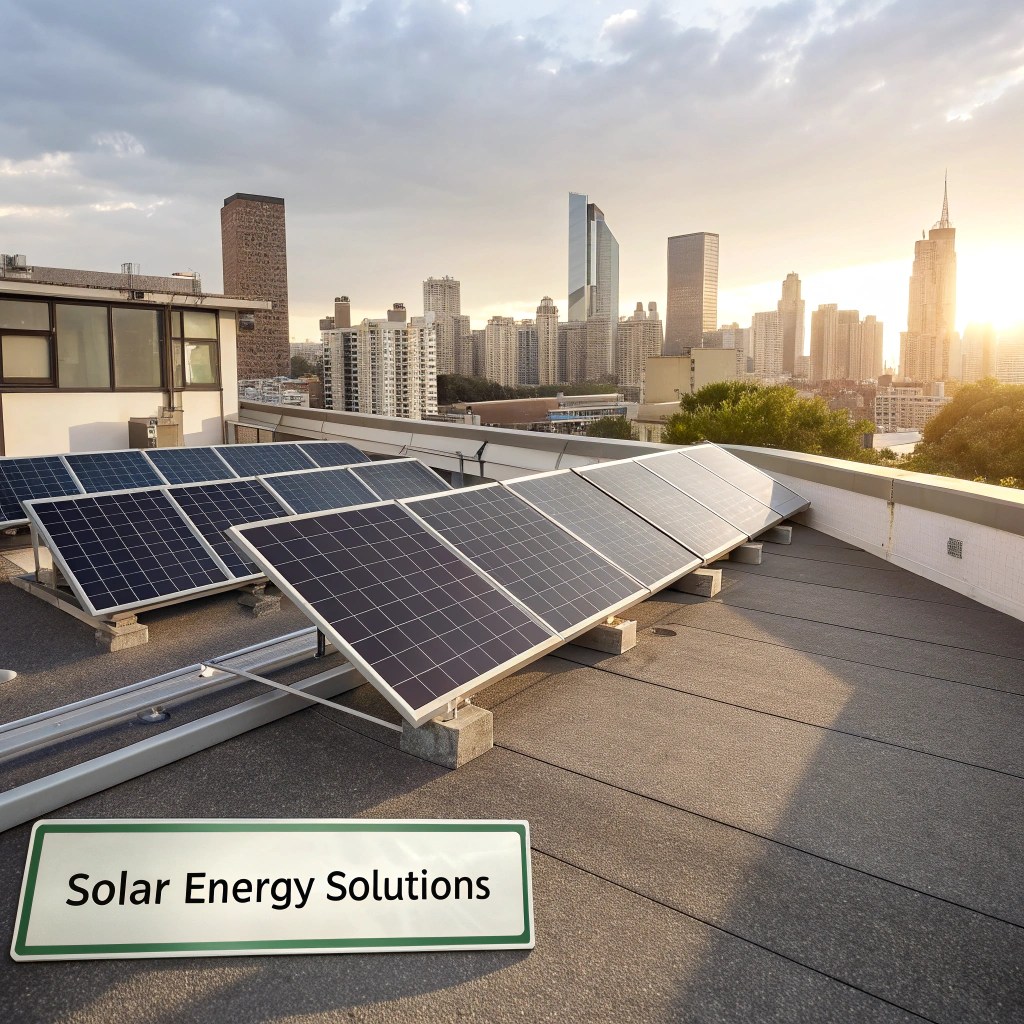
Solar power stands as the cornerstone of Solarpunk energy systems, and for good reason. The sun delivers more energy to Earth’s surface in one hour than humanity consumes in an entire year. Harnessing even a fraction of this abundant, clean resource can power our cities indefinitely without depleting finite resources or poisoning the atmosphere.
In the Solarpunk vision, every surface becomes a potential power generator. Rooftops shimmer with photovoltaic panels, parking structures provide both shade and electricity, and even windows incorporate transparent solar cells. This distributed approach contrasts sharply with the centralized fossil fuel model, creating resilient energy systems less vulnerable to disruption.
Rooftop Revolution
Individual buildings generate power at the point of consumption, eliminating transmission losses
Community Solar
Shared solar farms allow renters and those without suitable roofs to access clean energy
Smart Storage
Advanced batteries store excess daytime generation for nighttime use, ensuring 24/7 clean power
Intelligent Grids
AI-powered systems balance supply and demand across neighborhoods, maximizing efficiency
However, Solarpunk doesn’t rely on solar power alone. True resilience comes from diversity. Wind turbines—both large-scale and micro-scale—complement solar generation, producing power when skies are cloudy. Micro-hydro systems tap the energy in flowing water where geography permits. Even biodiesel from waste cooking oil and algae plays a role, powering vehicles and backup generators without petroleum.
Battery technology has evolved to make this renewable energy transition practical. Modern lithium-ion and emerging solid-state batteries store excess solar generation during peak production hours, releasing it during evening demand surges. At the neighborhood scale, shared battery banks create virtual power plants that stabilize the grid and provide emergency backup during outages.
Smart grid technology ties everything together. Sophisticated software monitors energy production and consumption in real-time, automatically routing power where it’s needed most. Machine learning algorithms predict weather patterns and usage trends, optimizing battery charging and discharging. Residents can track their energy use through intuitive apps, making conservation visible and engaging. This intelligent infrastructure transforms cities from passive energy consumers into active, adaptive energy ecosystems that balance supply and demand dynamically while eliminating waste and maximizing renewable resources.
Sustainable Architecture and Urban Design
Solarpunk architecture represents a radical departure from the glass-and-steel monotony of conventional development. Buildings become living organisms that breathe, adapt, and contribute to urban ecosystems rather than dominating them. This architectural philosophy integrates centuries-old wisdom about passive climate control with cutting-edge materials science, creating structures that are simultaneously ancient and futuristic.
Passive Solar Design
Strategic window placement and thermal mass capture winter sun for warmth while providing shade in summer. Overhangs, light shelves, and carefully calculated angles eliminate the need for excessive heating and cooling. Buildings orient toward the sun, with living spaces facing south in the Northern Hemisphere to maximize natural light and warmth.
Natural Ventilation
Operable windows, ventilation towers, and strategically placed openings create cross-breezes that cool interiors without air conditioning. Traditional techniques like wind catchers and courtyards work alongside modern computational fluid dynamics to optimize airflow. Buildings breathe naturally, reducing energy consumption by up to 40%.
Biophilic Materials
Bamboo grows to harvest size in just 3-5 years, providing strong, beautiful structural material. Hempcrete—made from hemp fibers and lime—sequesters carbon while providing excellent insulation. Reclaimed wood, recycled metal, and rammed earth reduce embodied energy while creating connections to natural world and human history.
Green Roofs and Living Walls
Perhaps nothing symbolizes Solarpunk architecture more than vegetation-covered buildings. Green roofs absorb rainwater, reducing stormwater runoff by up to 80% while providing insulation that cuts heating costs by 25% and cooling costs by 75%. These living surfaces also combat urban heat islands—the phenomenon where cities become significantly hotter than surrounding areas due to heat-absorbing concrete and asphalt.
Living walls—vertical gardens covering building facades—take these benefits even further. A single square meter of living wall can extract 2.3 kg of CO2 annually while producing 1.7 kg of oxygen. They filter air pollution, reduce noise, and provide habitat for urban wildlife. Beyond environmental benefits, studies show that views of vegetation reduce stress, improve cognitive function, and accelerate healing.
Human-Centered Public Space
Solarpunk urban design prioritizes people over vehicles. Wide pedestrian boulevards lined with shade trees invite strolling and social interaction. Protected bike lanes make cycling safe and appealing for all ages. Pocket parks every few blocks provide green respite from urban intensity.
Public spaces become venues for local markets, cultural performances, and community gatherings—the social glue that binds neighborhoods together. Streets transform from traffic sewers into vibrant public living rooms where children play, neighbors chat, and democracy happens organically. This human-scale design fosters the cooperation essential to Solarpunk’s vision.
The cumulative effect of these design principles is cities that feel fundamentally different from today’s urban environments. Buildings don’t loom as imposing monuments to corporate power but nestle into their surroundings like natural features. Streets bustle with human activity rather than automobile traffic. Every corner reveals thoughtful details—a rain garden filtering runoff, a community bulletin board announcing local events, a bench positioned perfectly to catch afternoon sun. This is architecture as care, urban design as community building, sustainability as beauty made tangible.
Community Cooperation and Social Innovation
Technology and architecture alone cannot create Solarpunk cities—they require fundamentally reimagined social structures. The movement recognizes that sustainability isn’t just an environmental challenge but a social and economic one. Hierarchical, extractive systems that concentrate wealth and power inevitably exploit both people and planet. True sustainability demands cooperation, equity, and democratic participation at every level.
Participatory Governance
Residents directly shape neighborhood policies through assemblies and digital platforms
Integrated Education
Schools teach renewable technology, food cultivation, and cooperative economics
Local Economies
Worker cooperatives and artisan businesses replace corporate chains
Social Equity
Benefits of sustainability shared equally across all communities
Mutual Aid
Neighbors support each other through tool libraries, time banks, and skill-sharing

Participatory Democracy
Solarpunk cities embrace radical democracy. Neighborhood assemblies allow residents to directly debate and decide local issues—from park design to energy policy. Digital platforms extend participation to those who cannot attend physical meetings, using blockchain-based voting systems to ensure transparency and prevent manipulation.
This participatory approach ensures that sustainability initiatives serve community needs rather than imposing top-down solutions. When people shape their own environments, they develop deep investment in maintaining and improving them.
Education for Transformation
Solarpunk schools look radically different from traditional institutions. Students learn to install solar panels alongside algebra, cultivate mushrooms alongside history. Curriculum integrates technical skills with systems thinking, preparing young people not just for jobs but for active citizenship in sustainable communities. School buildings themselves become teaching tools—visible solar arrays, rainwater harvesting systems, and productive gardens make abstract concepts tangible.
Adult education is equally vital. Community workshops teach skills like bicycle repair, food preservation, and passive house retrofitting. Knowledge becomes a commons—freely shared rather than hoarded as proprietary information. Online platforms and maker spaces democratize access to tools and training, enabling anyone to participate in building sustainable infrastructure.
Worker Cooperatives
Businesses owned and democratically controlled by their workers replace corporate hierarchies. Profits are shared equitably, decisions made collectively, and work organized around human wellbeing rather than shareholder returns. Cooperative bakeries, hardware stores, and solar installation companies demonstrate that alternatives to extractive capitalism can thrive economically while embodying Solarpunk values.
Artisan Economies
Local makers and craftspeople provide goods tailored to community needs. Rather than cheap, disposable products shipped across oceans, residents purchase durable items from neighbors who stand behind their work. This localization reduces transportation emissions, supports local prosperity, and rebuilds connections between producers and consumers that industrial capitalism severed.
Equity and Inclusion
Solarpunk explicitly rejects environmental initiatives that benefit only wealthy neighborhoods while leaving marginalized communities to suffer pollution and climate impacts. True sustainability must be universal and equitable—solar panels on public housing, bike lanes in every neighborhood, green spaces accessible to all. Social justice and environmental justice are inseparable aspects of the same transformation.
These social innovations create the cultural foundation for Solarpunk cities. When communities govern themselves democratically, educate for participation, and organize economies cooperatively, sustainability emerges naturally from shared values rather than imposed through regulation. People care for what they own collectively, conserve what they’ve worked together to create, and innovate when solving problems becomes a collaborative creative process rather than a profit-driven competition.
Challenges and the Path Forward
Despite its compelling vision and real-world successes, the path to Solarpunk cities faces significant obstacles. Acknowledging these challenges honestly is crucial—not to justify inaction but to develop effective strategies for overcoming them. The transformation of our urban landscapes requires confronting entrenched interests, scaling innovations, and catalyzing cultural shifts that may feel daunting but are absolutely achievable with sustained effort and strategic thinking.
Fossil Fuel Dependence
Our entire infrastructure—from transportation systems to manufacturing processes to political economies—has been built around cheap fossil fuels over the past two centuries. Oil, gas, and coal companies wield enormous political influence, subsidies, and invested capital. Breaking this dependence requires not just technological substitution but restructuring power relationships and economic incentives.
The path forward involves eliminating fossil fuel subsidies, implementing carbon pricing, and redirecting investment toward renewable infrastructure. Legal strategies like climate litigation hold polluters accountable. Divestment campaigns pressure institutions to withdraw financial support from fossil fuel companies. Most importantly, building visible alternatives demonstrates that prosperity doesn’t require petroleum.
Scaling Decentralized Technologies
While rooftop solar and community microgrids work beautifully at small scales, expanding them to serve entire metropolitan regions presents complex challenges. Manufacturing millions of solar panels requires significant upfront capital and rare earth minerals with problematic supply chains. Battery production faces similar constraints. Grid integration of variable renewable sources demands sophisticated coordination.
Solutions include developing circular economy approaches that recycle renewable energy equipment, investing in battery alternatives like pumped hydro storage and hydrogen, and creating supportive policy frameworks that incentivize distributed generation. International cooperation can establish ethical mineral sourcing standards while developing alternatives to scarce materials.
Balancing Growth and Preservation
Cities worldwide are growing rapidly as populations urbanize. Building housing, infrastructure, and services for billions of new urban residents could devastate remaining natural areas—or, designed thoughtfully, could concentrate human impact while allowing ecosystems to recover. The challenge lies in accommodating growth through density and intelligent design rather than sprawl.
Strategies include establishing permanent urban growth boundaries, prioritizing infill development and adaptive reuse over greenfield construction, and creating transportation systems so efficient that car ownership becomes unnecessary. Green belts and ecological corridors within cities provide nature access without requiring suburban sprawl.
Cultural and Behavioral Change
Perhaps the deepest challenge is transforming how people think about consumption, mobility, and community. Decades of advertising have equated happiness with material accumulation and car ownership with freedom. Shifting toward sufficiency, cooperation, and public goods requires unlearning powerful cultural programming.
Change happens through positive examples, supportive policies, and addressing legitimate needs. When bike lanes make cycling safe, people bike more. When public transit runs frequently and reliably, people leave cars at home. When community gardens produce abundant food, people rediscover cultivation’s pleasures. Policy shapes infrastructure shapes behavior shapes culture—creating positive feedback loops that accelerate transformation.
These challenges are undeniably significant, but none are insurmountable. Every obstacle faced by the Solarpunk transition has precedents of successful transformation—rural electrification, the internet’s global spread, the rapid phase-out of ozone-depleting chemicals. What these historical examples demonstrate is that systemic change requires sustained pressure from multiple directions: grassroots movements creating facts on the ground, policy reforms enabling scaled adoption, technological innovation reducing costs and improving performance, and cultural shifts normalizing new behaviors. The Solarpunk transformation is already underway in thousands of communities worldwide. Our task is accelerating and expanding what’s already begun.
Conclusion: Cultivating the Cities We Dream Of
The Solarpunk vision offers something desperately needed in our age of climate anxiety: a comprehensive, compelling, and achievable blueprint for urban futures we actually want to inhabit. Rather than retreating into nostalgia or resigning ourselves to dystopian decline, this movement charts a third path—forward into cities that harmonize human thriving with ecological flourishing.
This isn’t naive optimism. Every element of the Solarpunk city—from rooftop solar arrays to green infrastructure to cooperative governance—exists and functions today in communities worldwide. The challenge isn’t inventing new technologies or social structures from scratch but scaling and synthesizing proven solutions into comprehensive urban transformations. We have the knowledge, the tools, and increasingly, the political will. What remains is application: the patient, persistent work of building the future one project, one policy, one community at a time.
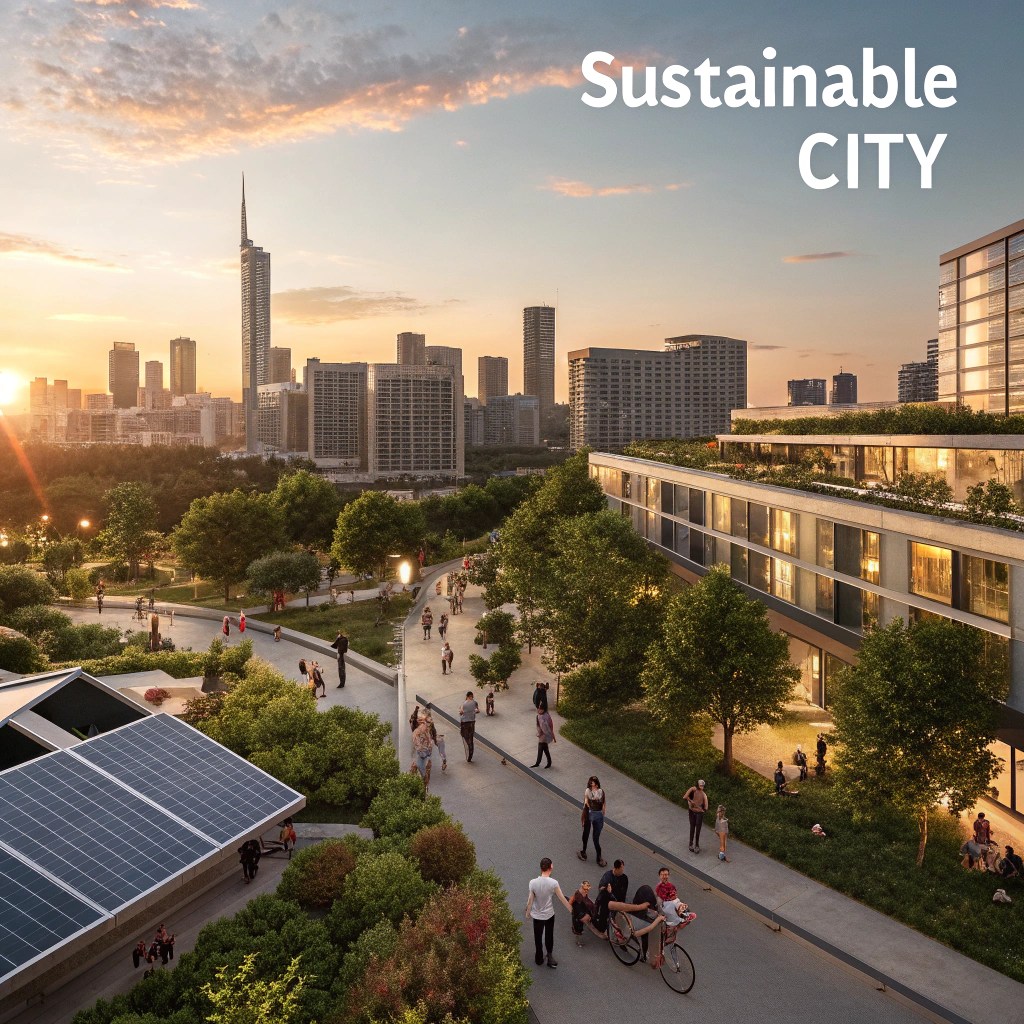
Harnessing Clean Energy
Every rooftop becomes a power plant, every surface a potential generator, creating resilient distributed grids that democratize energy access
Designing Living Architecture
Buildings breathe, adapt, and contribute to urban ecosystems through green roofs, living walls, and biophilic materials that blur boundaries between built and natural
Fostering Community Spirit
Participatory governance, cooperative economics, and shared public spaces rebuild social connections frayed by individualism and automobile dependence
Creating Equity and Justice
Sustainability benefits reach every neighborhood, ensuring environmental and social justice advance together toward truly universal wellbeing
The Solarpunk transformation doesn’t require waiting for perfect conditions or unanimous agreement. Change begins wherever people are ready—a neighborhood solar cooperative here, a protected bike lane there, a community garden in a vacant lot. These small victories accumulate, demonstrate viability, and inspire replication. Each success makes the next easier, building momentum toward the tipping point where sustainable cities become the obvious default rather than radical exception.
“The future is not some place we are going, but one we are creating. The paths are not to be found, but made. And the activity of making them changes both the maker and the destination.”
— John Schaar, political theorist
This quote captures the essence of Solarpunk praxis. We’re not passive observers awaiting predetermined futures but active creators shaping possibilities through present choices. Every decision about energy, architecture, transportation, and community organization either reinforces unsustainable patterns or builds alternatives. The Solarpunk city emerges from millions of such choices—individual and collective, personal and political—accumulating into transformation.
The cities we dream of are within reach. Not perhaps exactly as we envision them—reality will surprise us with unplanned delights and unforeseen complications—but fundamentally achievable in our lifetimes. Solar technology grows cheaper and more efficient annually. Renewable energy employment explodes while fossil fuel jobs decline. Young people increasingly reject consumption-driven lifestyles in favor of experiences and community. Political momentum builds as climate impacts intensify and solutions prove themselves.
What Solarpunk offers is vision without prescription—a compelling destination with multiple possible routes. Copenhagen’s path will differ from Lagos’s, just as Portland’s differs from Phoenix’s. Local conditions, cultures, and resources shape specific implementations. But the core principles remain constant: renewable energy, ecological design, community cooperation, and social equity. Together, we can transform our urban landscapes into ecosystems of hope and renewal, proving that technology and nature, human civilization and ecological flourishing, can indeed thrive together in beautiful, just, sustainable harmony.
Connect and Explore
Join the growing global movement reimagining urban futures through sustainability, innovation, and community cooperation. These hashtags connect you to conversations, projects, and communities building Solarpunk cities worldwide.
#Solarpunk
#SustainableCities
#RenewableEnergy
#GreenArchitecture
#UrbanDesign
#EcoFriendly
#CommunityCooperation
#ClimateAction
#DecentralizedEnergy
#FutureOfCities
These hashtags represent more than keywords—they’re gateways to thriving communities of architects, activists, policymakers, artists, and everyday citizens collaborating to build the sustainable cities we desperately need. Use them to share your own projects, discover inspiring examples, connect with like-minded innovators, and contribute to the growing body of knowledge about creating urban environments where humanity and nature flourish together.
The future is being built right now. Join us in creating it.
 NellyWorld
Leave a comment