Football is the beautiful game, watched and loved by billions around the world. Whether you’re tuning in for the first time or trying to understand what all the fuss is about, you don’t need to know every intricate rule to enjoy the sport. In fact, understanding just ten fundamental rules will transform your viewing experience from confusing to captivating. This guide breaks down the essential rules that every beginner should know, explained in plain language without the jargon. Once you grasp these basics, you’ll find yourself following the action, understanding the referee’s decisions, and actually enjoying those heated debates with your friends about whether that was really a foul or not.
Rule 1: The Offside Rule Simplified
What It Means
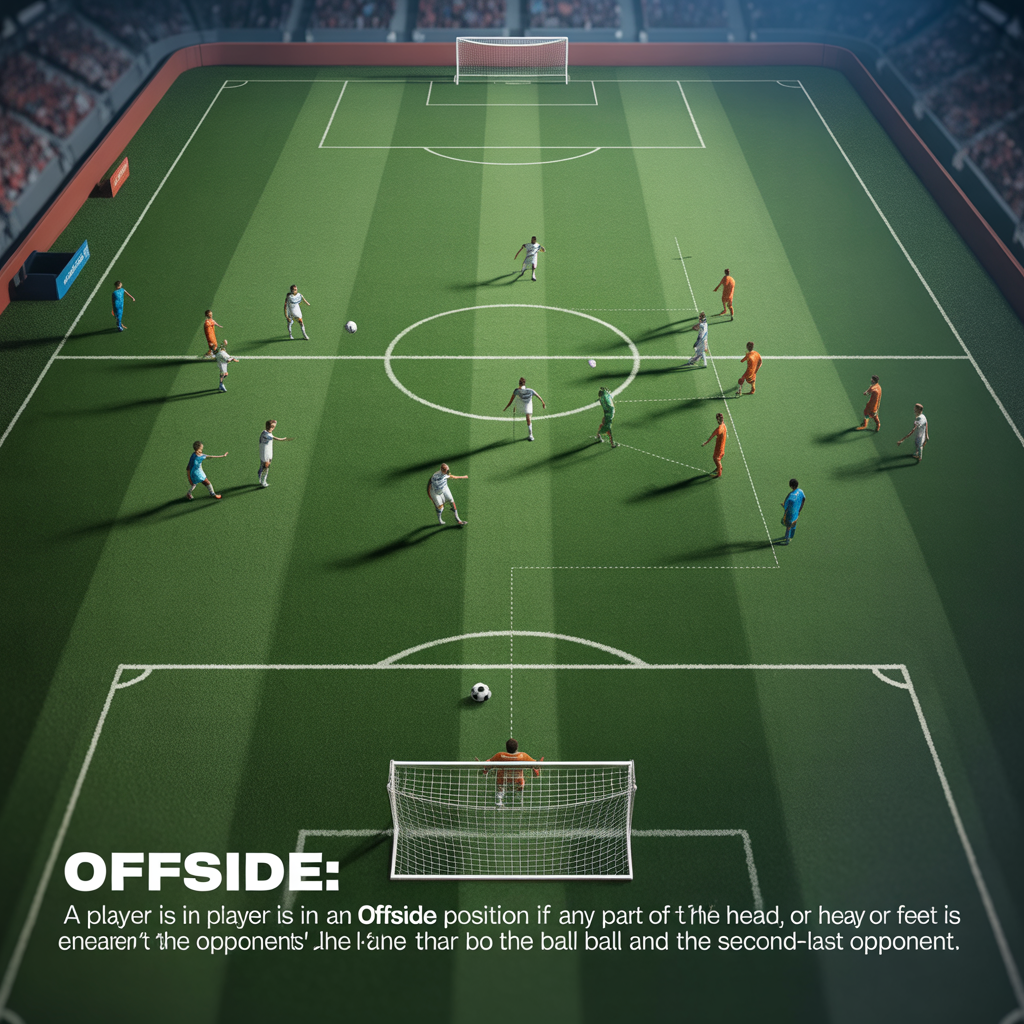
The offside rule is football’s most misunderstood concept, but it’s actually quite simple. A player is offside if they’re closer to the opponent’s goal than both the ball and the second-to-last defender when the ball is played to them. Think of it as a “no cherry-picking” rule—you can’t just hang out by the goal waiting for an easy score.
Here’s the key: you’re only offside at the moment the ball is passed to you, not when you receive it. So players time their runs carefully, waiting until just the right moment to sprint forward. Also, you can’t be offside in your own half of the field, and you can’t be offside from throw-ins, goal kicks, or corner kicks.
Why It Matters
Without this rule, attackers would simply camp in front of the goal, making the game boring and requiring defenders to always stay back. Offside creates the dynamic, strategic gameplay that makes football exciting. When you see a player raise their arm and the referee blow the whistle, now you’ll know why—someone was caught ahead of the play.
Rules 2 & 3: Fouls, Free Kicks, and Throw-Ins
Fouls & Free Kicks
A foul happens when a player breaks the rules—usually by pushing, tripping, or making contact with an opponent unfairly. When the referee calls a foul, the fouled team gets a free kick from where the foul occurred.
There are two types: direct free kicks (where you can score directly) and indirect free kicks (where the ball must touch another player first). If a foul happens inside the penalty box, it’s a penalty kick—a one-on-one shot from 12 yards out.
Throw-Ins
When the ball goes completely over the sideline, play restarts with a throw-in. The team that didn’t touch it last gets to throw it back in. Here’s the catch: both feet must stay on the ground, and you must throw the ball with both hands from behind and over your head.
You’ll often see players do a little hop or drag their toe, but as long as part of their foot stays in contact with the ground, it’s legal. And here’s something cool—you can’t score directly from a throw-in, even if you have a cannon for an arm.

Rules 4 & 5: Cards and Restarts
Yellow & Red Cards
Cards are football’s disciplinary system, and they’re pretty straightforward. A yellow card is a warning for serious fouls, unsporting behavior, or repeated minor offenses. Think of it as the referee saying “watch yourself.”
A red card means you’re out of the game—no substitution allowed, so your team plays with one fewer player. You get a red card for extremely dangerous play, violent conduct, or accumulating two yellow cards in the same match. When a player gets sent off, it can completely change the game’s outcome, which is why you’ll see coaches and players arguing so passionately with referees about card decisions.
Goal Kick vs Corner Kick
These two restarts look similar but have opposite meanings. A goal kick happens when the attacking team kicks the ball over the goal line (but not into the goal). The defending goalkeeper gets to kick it back into play from their own box—basically a “nice try, but no” from the defense.
A corner kick is the opposite: when the defending team accidentally kicks it over their own goal line, the attacking team gets to place the ball in the corner arc and kick it toward the goal. Corner kicks are prime scoring opportunities, which is why you’ll see all the tall players crowd into the box.
Rule 6: Understanding Handball

The Basic Principle
In football, only the goalkeeper can use their hands—and even then, only inside their own penalty box. For everyone else, touching the ball with your hand or arm is generally a handball offense. But here’s where it gets interesting: not every hand-to-ball contact is a foul.
When It’s Actually Handball
The referee considers whether the handball was deliberate and whether your arm was in an “unnatural position.” If the ball hits your hand while it’s tucked against your body, that’s usually not a foul. But if your arms are spread wide or raised above your head, making your body bigger, that’s almost always called.
Recent rule changes have made this stricter, especially for goals. If the ball touches an attacker’s hand or arm immediately before a goal—even accidentally—the goal doesn’t count. This has caused plenty of controversial moments in modern football, but knowing this rule helps you understand why perfectly good-looking goals sometimes get disallowed.
Rules 7 & 8: Game Flow and Timing
The Advantage Rule
Here’s a brilliant piece of refereeing: when a foul occurs but stopping play would actually hurt the team that was fouled, the referee can let play continue. You’ll see them make a sweeping “play on” gesture with their arms.
For example, if a defender fouls an attacker but the ball rolls to another attacker in a better position, the referee might allow advantage. This keeps the game flowing and prevents teams from benefiting from their own fouls. The referee can still come back and issue a card after the play if needed, which sometimes surprises new viewers who wonder why someone’s getting booked when play never stopped.
The Clock Never Stops
Unlike basketball or American football, the clock in soccer never stops running—not for injuries, substitutions, or celebrations. Instead, the referee keeps track of lost time and adds it at the end of each half as “stoppage time” or “injury time.”
This is why you’ll see “90+3” on the clock—it means 90 minutes plus 3 minutes of added time. The referee has discretion over exactly when to blow the final whistle, which can create nail-biting drama as teams push for last-minute goals. Don’t leave your seat when you see 90 minutes—the game isn’t over until the referee says it is, and some of football’s most memorable moments happen in stoppage time.
Rule 9: VAR—Technology in Football
What Is VAR?
VAR stands for Video Assistant Referee, and it’s football’s embrace of modern technology. Introduced in recent years, VAR allows a team of officials watching video screens to review crucial decisions and alert the on-field referee to potential errors. When you see the referee draw a rectangle in the air with their fingers, they’re signaling that VAR is being consulted.
When VAR Gets Involved
VAR only reviews four types of decisions: goals (checking if they should count), penalty decisions (both given and not given), direct red card incidents, and mistaken identity (making sure the referee booked the right player). It won’t check every little foul or throw-in decision—only these game-changing moments.
VAR checks in background
Continuously monitoring for clear errors
Alert referee if needed
VAR official recommends on-field review
Referee reviews monitor
Checks multiple angles on sideline screen
Final decision made
Referee confirms or changes original call
While VAR has reduced some controversial errors, it’s also created new debates about the “spirit of the game” versus technical precision. You’ll hear fans and pundits argue both sides passionately, which is part of football’s charm.
Rule 10: Extra Time Explained
When Games Need a Winner
Most football matches can end in a draw—the score is tied and both teams go home with one point each in league play. But in knockout competitions like the World Cup, Champions League, or domestic cup tournaments, someone has to advance to the next round.
When regulation time (90 minutes plus stoppage time) ends in a draw during these knockout matches, the game goes to extra time: two additional 15-minute periods. That’s 30 more minutes for teams to find a winner, and yes, there’s stoppage time in extra time too.
If It’s Still Tied
If the score remains level after extra time, the match goes to a penalty shootout. Five players from each team take turns shooting from the penalty spot, one-on-one against the goalkeeper. If it’s still tied after five kicks each, it becomes sudden death—first team to miss when the other scores loses.

Pro tip: Some tournaments use “away goals” as a tiebreaker before extra time, while others have abolished this rule. The specific format can vary by competition, but the basic principle remains—knockout matches will find a winner one way or another, even if it takes 120 minutes and a shootout to do it. These marathon matches create some of football’s most dramatic and emotional moments.
Why These Rules Matter
Clarity Enhances Enjoyment
Understanding why the referee made a call transforms confusion into appreciation. Instead of frustration, you’ll experience the strategic depth of the game.
Follow the Match Flow
Knowing these rules helps you anticipate what’s coming next, understand team strategies, and appreciate the split-second decisions players make.
Highlights Become Meaningful
When you watch goal compilations or match highlights, you’ll understand why certain moments were significant, not just that the ball went into the net.
Join the Conversation
Armed with rule knowledge, you can participate in those passionate post-match debates about controversial calls without feeling lost or confused.
Football’s beauty lies in its simplicity—22 players, one ball, two goals—but its depth comes from these foundational rules that govern fair play and maintain the game’s integrity. Once you internalize these ten rules, you’ll notice how naturally they become part of your viewing experience. You’ll start catching offside calls before the flag goes up, predicting when advantage will be played, and understanding why certain decisions cause such passionate reactions. The game doesn’t just become watchable—it becomes genuinely thrilling.
Your Football Journey Starts Here
“Learn just these 10 rules—and football becomes twice as fun.”
You’ve now got the essential toolkit for understanding football. These ten rules cover the vast majority of what happens in any match, from local games to World Cup finals. Sure, there are more intricate rules about substitutions, equipment, and specific scenarios, but you don’t need those to enjoy the sport. What you have now is enough to watch a match with confidence, understanding the referee’s decisions and appreciating the tactical battles unfolding on the pitch.
The next time you watch a game, try focusing on one or two of these rules. Notice when players time their runs to stay onside. Watch how teams use throw-ins strategically. See if you can predict when the referee will play advantage. With each match you watch, these rules will become second nature, and you’ll start noticing the subtler aspects of the game—the movement off the ball, the tactical adjustments, the individual brilliance within the team structure.
Start Watching
Pick a league or tournament and commit to following it for a few weeks. You’ll quickly recognize teams, players, and patterns.
Ask Questions
Don’t be shy about asking experienced fans to explain things. Most football lovers are thrilled to share their knowledge and passion.
Enjoy the Journey
Remember, even lifelong fans are still learning. Football’s beauty is that there’s always something new to discover and appreciate.
Welcome to the world’s most popular sport. Now go enjoy the beautiful game!
 NellyWorld
Leave a comment